


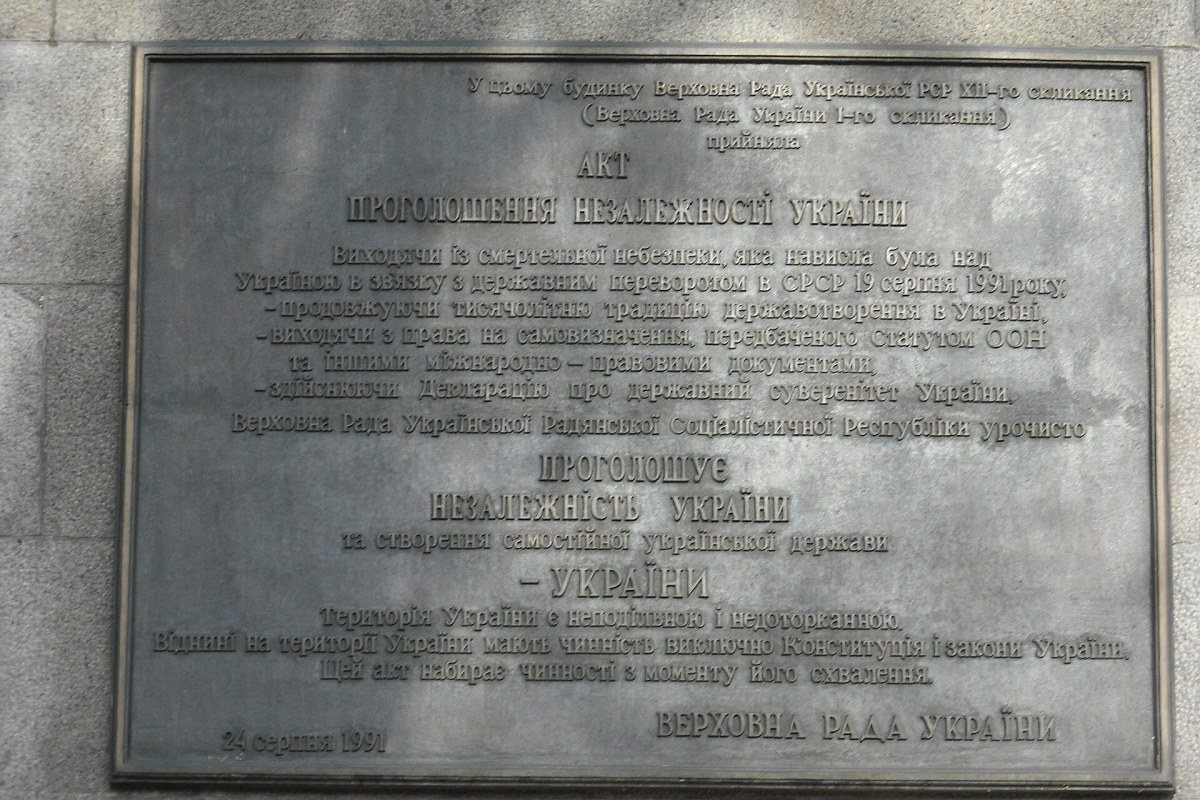
Every law that shapes daily life in Ukraine, from tax rules to school regulations, passes through the same constitutional path. The process involves the Verkhovna Rada, its committees, the President and, in some cases, the Constitutional Court. While the details are set out in parliament's Rules of Procedure, the main stages are fixed in the Constitution itself. Here is how an idea becomes binding law.
Step one: the right of legislative initiative
Not anyone can formally submit a bill to parliament. Under Article 93 of the Constitution, the right of legislative initiative belongs to three actors:
- the President of Ukraine;
- people's deputies, individually or in groups;
- the Cabinet of Ministers of Ukraine.
Citizens, civic organisations, businesses and local authorities often develop ideas for legislation, but to enter the formal process their proposals must be taken up by one of these subjects. Electronic petitions to the President, parliament or the government are one channel through which public proposals can reach decision-makers.
The President may designate a bill as urgent, in which case parliament considers it out of turn. Bills that would affect budget revenues or expenditures must be accompanied by a financial and economic justification.
Step two: registration and committee work
A submitted bill is registered in the Verkhovna Rada and receives a number. It is then assigned to a main committee responsible for the relevant policy area, while other committees may also provide opinions. The parliament's legal department, known as the Main Scientific and Expert Department, prepares an expert conclusion on the draft, assessing its quality and consistency with existing law.
The committee studies the text, may hold hearings and consults with ministries, experts and stakeholders. It then recommends what the plenary should do: adopt the bill as a basis, adopt it as a whole, send it back to the initiator or reject it. Alternative bills on the same subject can be submitted within a set period and are considered together with the original.
Step three: the readings
Most bills go through several readings in the plenary hall:
- First reading. Deputies discuss the general concept of the bill and vote on whether to adopt it as a basis. At this stage the idea is approved, not the final wording.
- Proposals and amendments. After the first reading, deputies submit written proposals and amendments within a deadline. The committee reviews each one and prepares a comparative table showing which were accepted or rejected.
- Second reading. The plenary considers the bill article by article, along with disputed amendments, and then votes on the whole text.
- Third reading. This is used when the text needs further refinement after the second reading, for example in particularly complex codes.
Simple or uncontroversial bills may be adopted in the first reading as a whole. In every case a law is passed only if it receives at least 226 votes, a majority of the constitutional composition of the Rada, regardless of how many deputies are present in the hall.
Step four: the President's signature or veto
Once adopted, the law is signed by the Chairman of the Verkhovna Rada and sent without delay to the President. The President then has fifteen days to act and has two options:
- Sign the law and ensure its official promulgation.
- Return it to parliament with reasoned proposals for changes. This is commonly called a veto.
If the President neither signs nor returns the law within fifteen days, it is considered approved and must be signed and published. When a law is returned, the Rada can accept the President's proposals and adopt the law again in the amended form. Alternatively, it can override the veto by readopting the law in its original form with at least two-thirds of the constitutional composition, 300 votes. In that case the President must sign the law within ten days.
Step five: publication and entry into force
A law becomes effective only after official publication. Laws are published in official outlets, including the parliamentary newspaper and the official bulletins of legislation. Under the Constitution, a law enters into force ten days after its official publication unless the law itself sets a different date. Many laws specify a later date to give citizens, businesses and public bodies time to prepare.
Even after entry into force, a law can still be challenged. The President, a group of at least 45 deputies, the Supreme Court and the Ombudsman, among others, can ask the Constitutional Court to review whether it conforms to the Constitution. Individuals may also lodge a constitutional complaint in certain circumstances.
The multi-stage path from bill to law is designed to balance efficiency with careful scrutiny. Committee review, expert opinions, several readings and the presidential check all create opportunities to correct mistakes and debate alternatives. For anyone following Ukrainian legislation, the registered bill number and its current stage are the most useful clues to how close a proposal is to becoming law.
What's Your Reaction?
 Like
0
 Dislike
0
 Love
0
 Funny
0
 Wow
0
 Sad
0
 Angry
0













Comments (0)