


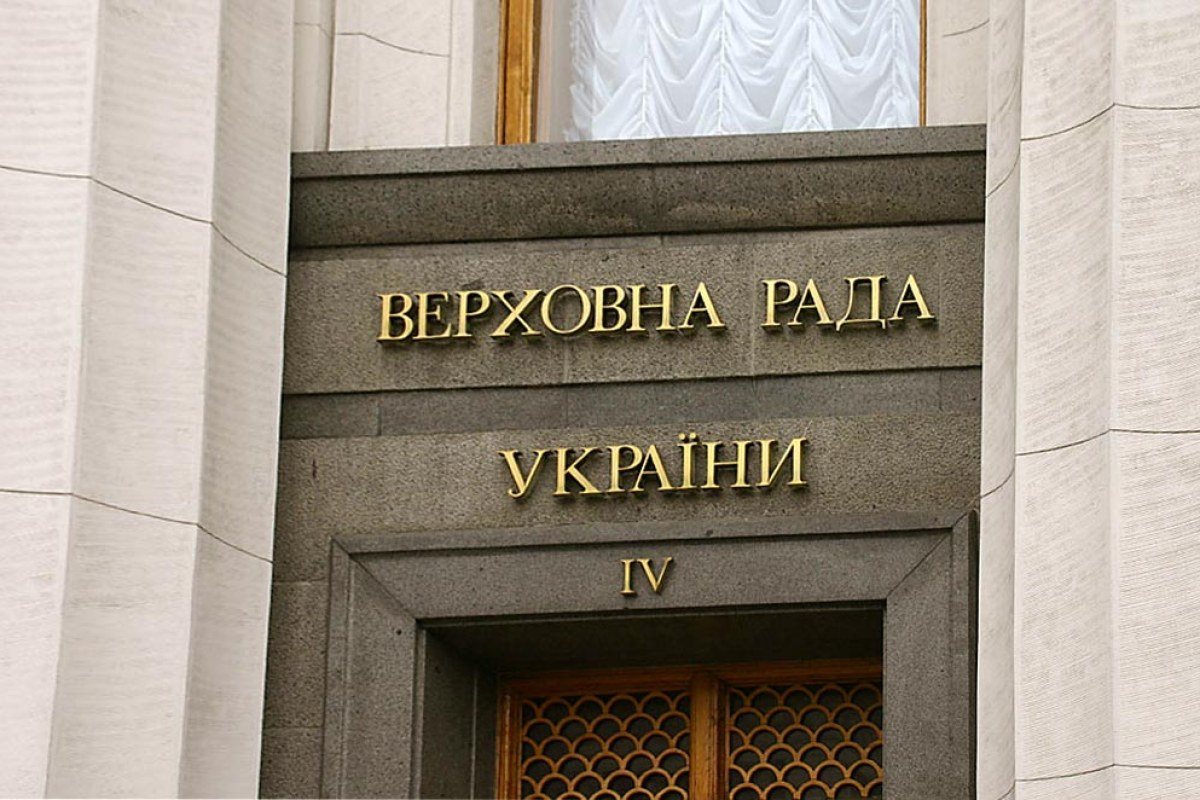
Every modern state needs a rulebook that sits above all other rules. For Ukraine, that document is the Constitution adopted by the Verkhovna Rada on 28 June 1996. It defines who holds power, how that power is divided, what rights every person enjoys and how the text itself may be changed. Understanding it is the best starting point for anyone who wants to make sense of how the Ukrainian state works, from parliamentary votes to court rulings.
A long road to a new basic law
When Ukraine declared independence in August 1991, it was still governed by the 1978 Constitution of the Ukrainian SSR, a Soviet-era document that was amended many times to fit the needs of a sovereign state. Drafting a genuinely new constitution proved difficult. Parliament and the presidency disagreed about how much power each should hold, and several drafts were debated and set aside in the early 1990s.
In 1995 the President and the Verkhovna Rada signed a temporary Constitutional Agreement that set out a working division of powers until a full constitution could be adopted. The decisive moment came in June 1996. After an intense session that ran through the night, deputies approved the new Constitution on the morning of 28 June with 315 votes, comfortably above the two-thirds threshold required. Ukraine became one of the last post-Soviet states to adopt a completely new basic law, and 28 June has since been marked as Constitution Day, a national holiday.
How the document is organised
The Constitution consists of 161 articles grouped into chapters, followed by final and transitional provisions. Its main parts cover:
- General principles – the foundations of the state, including sovereignty, the rule of law and the status of the state language and symbols.
- Human and citizens' rights, freedoms and duties – one of the longest sections, listing civil, political, social and economic rights.
- Elections and referendums – the ways in which citizens exercise power directly.
- State institutions – separate chapters on the Verkhovna Rada, the President, the Cabinet of Ministers and other executive bodies, and the justice system.
- Territorial structure and local self-government – how the country is divided and how communities run their own affairs.
- The Constitutional Court – the body that guards the Constitution itself.
- Amendment procedures – the rules for changing the text.
The core principles
Several articles set the tone for the entire document. Article 1 describes Ukraine as a sovereign and independent, democratic, social, law-based state. Article 3 declares that the human being, together with his or her life, health, honour, dignity, inviolability and security, is the highest social value, and that the main duty of the state is to affirm and ensure human rights and freedoms.
Article 5 states that the people are the bearer of sovereignty and the only source of power, which they exercise directly and through state and local bodies. Article 6 establishes the separation of powers into legislative, executive and judicial branches. Article 8 enshrines the rule of law and gives the Constitution the highest legal force: all laws and other legal acts must conform to it, and its norms apply directly, meaning a person can rely on them in court even where no specific law exists.
The Constitution also defines Ukraine as a unitary state. Its territory is indivisible and inviolable, and it is divided into the Autonomous Republic of Crimea, oblasts, districts, cities and villages, with Kyiv and Sevastopol holding special status established by law.
Rights and freedoms in focus
The chapter on rights is often described as the heart of the document. It guarantees the right to life, the inviolability of the home, privacy of correspondence, freedom of movement, freedom of thought, speech and religion, the right to association and peaceful assembly, and the right to own property. Social rights include education, health care, social protection and housing. The Constitution also lists duties, such as paying taxes, respecting the rights of others and protecting the environment and cultural heritage.
Importantly, the text states that constitutional rights and freedoms cannot be abolished, and that the content and scope of existing rights may not be narrowed when new laws are adopted or old ones amended. Certain rights may be restricted temporarily under martial law or a state of emergency, but the Constitution names specific rights, including the right to life and the right to dignity, that may never be limited.
A living document
Although it is designed to be stable, the Constitution has been amended several times since 1996, notably to rebalance powers between the President and parliament and to reform the justice system. Changing it requires broad agreement: ordinary amendments need the support of at least two-thirds of all deputies, and changes to its most fundamental chapters must also be approved in a national referendum. Every proposal must first receive an opinion from the Constitutional Court confirming that it does not restrict rights or threaten independence and territorial integrity.
For citizens, the Constitution is more than a legal text. It is the reference point in public debates, the foundation of court decisions and a statement of the values on which the independent Ukrainian state was built.
What's Your Reaction?
 Like
0
 Dislike
0
 Love
0
 Funny
0
 Wow
0
 Sad
0
 Angry
0












Comments (0)