


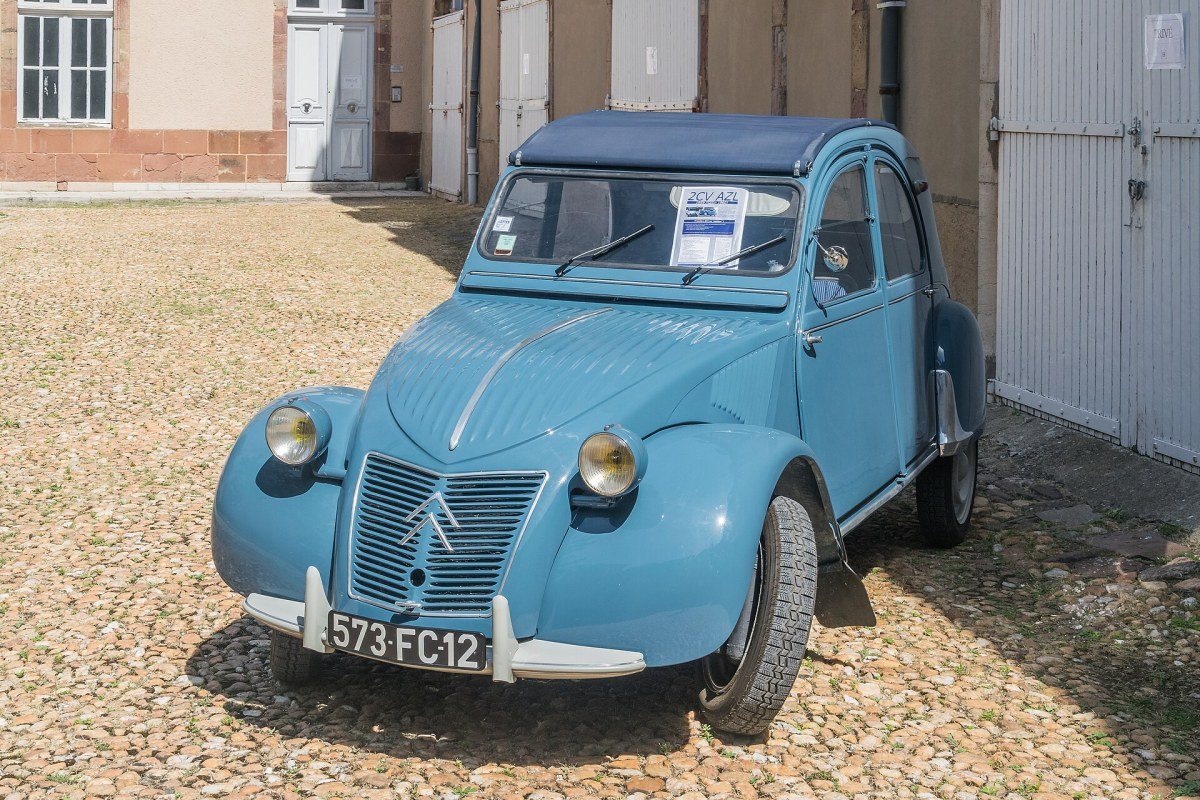
The Citroën 2CV is one of the most charming and unusual cars ever built. With its corrugated bonnet, canvas roof and soft, rolling ride, it looks almost like a cartoon of a car. Yet behind its quirky appearance lay a carefully thought-out design aimed at a serious goal: to motorise rural France. The 2CV stayed in production for more than four decades and became a beloved symbol of practicality and simplicity.
A Car for the Countryside
In the 1930s, much of rural France still relied on horses and carts. Citroën's leadership, particularly Pierre-Jules Boulanger, wanted a vehicle that would allow farmers and small-town families to get around affordably. The design brief, as it is often recounted, called for a car that could carry two farmers and a load of produce, travel over poorly maintained roads and even cross a ploughed field without breaking a basket of eggs. It also had to be cheap to buy, economical to run and easy to drive for people with no previous motoring experience.
The shorthand for the idea was an "umbrella on four wheels": a simple, light shelter that could carry people and goods wherever they needed to go.
Interrupted by War
Prototypes were developed in the late 1930s, and a small batch was being prepared when the Second World War broke out. Citroën hid or destroyed most of the prototypes to keep them out of the hands of the occupying forces, and some were rediscovered decades later in barns and outbuildings.
After the war, the design was refined, and the 2CV was finally unveiled at the Paris Motor Show in 1948. Some critics mocked its appearance, but buyers responded enthusiastically, and waiting lists soon stretched for years.
Ingenious Engineering
The 2CV's design was full of clever, often unconventional solutions:
- An air-cooled flat-twin engine, small, simple and able to cope with heat and cold without a radiator.
- Long-travel interconnected suspension that linked front and rear wheels on each side, giving a remarkably soft ride on rough roads and a famous tendency to lean in corners.
- A roll-back canvas roof that allowed tall loads to be carried and reduced weight and cost.
- Removable seats that could be taken out for picnics or to create more cargo space.
- Front-wheel drive, which Citroën had already pioneered in mass production with the Traction Avant.
The name itself refers to the French fiscal horsepower rating, deux chevaux-vapeur, a tax category rather than a measure of actual engine output.
Variants and Relatives
The 2CV platform proved highly adaptable. It was used for a van, the Fourgonnette, which became a common sight with tradespeople, as well as for several related models. Notable relatives include the Dyane, a more modern-looking hatchback; the Ami, a more upmarket family car; and the Méhari, a plastic-bodied open utility vehicle popular in holiday resorts. A twin-engined, four-wheel-drive version known as the Sahara was also built in small numbers for difficult terrain.
A Cultural Symbol
Over time, the 2CV took on meanings far beyond transport. It became associated with students, artists and counterculture travellers, who appreciated its simplicity and low running costs. The car appeared in films, including a memorable chase in a James Bond film, and its distinctive shape made it a favourite subject for postcards and illustrations.
The Long Goodbye
Production of the 2CV continued long after its basic design had become dated. Rising safety and emissions standards gradually made it harder to sell in some markets. French production ended in 1988, and the final 2CV rolled off the line at Citroën's plant in Mangualde, Portugal, in 1990. Millions had been built by then, with many more counting the related models.
Why the 2CV Still Charms
Today the 2CV enjoys a dedicated following. Owners' clubs organise rallies, and specialist workshops can rebuild almost every part of the car. Its appeal lies in its honesty: it was designed to meet real needs with the simplest possible means, and it did so with a sense of humour.
In an age of complex electronics and ever-larger vehicles, the 2CV remains a reminder that thoughtful design can make a car both useful and lovable, even if it is not fast, luxurious or particularly comfortable on the motorway.
What's Your Reaction?
 Like
0
 Dislike
0
 Love
0
 Funny
0
 Wow
0
 Sad
0
 Angry
0









Comments (0)