


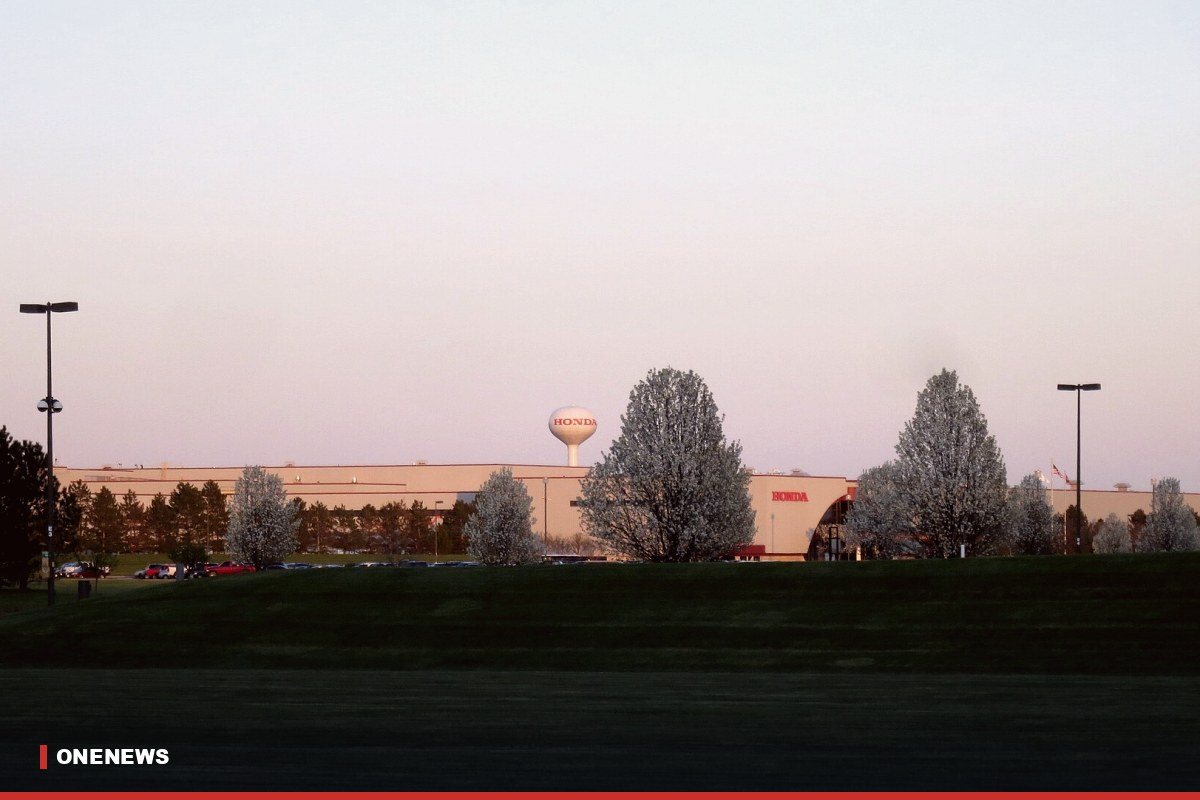


Honda is putting $3 billion into a brand-new car factory in central Ohio, a move announced on November 9 that underlines how firmly the Japanese carmaker is now backing hybrids in the United States after scaling back some of its fully electric ambitions earlier this year.
The plant in numbers
According to Honda, the factory will sit on land between its existing assembly plants in East Liberty and Marysville. It will be the company's fourth auto plant in Ohio and its ninth auto-related production facility in the US. The headline figures:
- investment of $3 billion;
- capacity for 240,000 vehicles a year;
- more than 2,000 new jobs;
- production due to start in 2029, subject to final government approvals.
The lines are being designed to handle hybrid, petrol and battery-electric vehicles, although Honda has not said what the mix will be. Several new Honda and Acura models for the site are already being developed by Honda R&D in the US. Once it is running, Honda's US car-making capacity will reach roughly 1.3 million vehicles a year, and about 1.9 million across North America.


More hybrid hardware across the network
The new factory is only part of the package. At Honda's transmission plant in Ohio, an existing line will be converted into a second hybrid system line, lifting hybrid system capacity by 250%. The plant currently builds the two-motor hybrid unit used in the CR-V, Accord and Civic, and will lead production of a larger hybrid system. The transmission plant in Georgia will start making next-generation hybrid systems for bigger vehicles.
Elsewhere, Alabama will add a new V6 hybrid engine, the Anna engine plant in Ohio is being retooled for a next-generation four-cylinder engine, and the Alliston plant in Ontario is being prepared for new hybrid and petrol models. "We are making one of the most significant commitments in our history," said Bob Nelson, executive vice president of American Honda Motor Co.
A clear change of direction
The investment caps a year of strategic repositioning. As Transport Topics notes, Honda cancelled three battery-electric models it had planned to build in the US and, in May, put an estimated C$15 billion EV battery supply chain project in Canada on indefinite hold. That same month it said it would launch 15 new Honda and Acura hybrid models globally by 2030, with North America expected to be the main market for many of them.
Hybrids already account for around a third of Honda's US sales, and the brand's American sales rose 5% over the first ten months of the year. Demand for hybrids has proved steadier than for pure EVs, which is why a growing number of manufacturers are steering fresh capital towards them.
Why it matters
Trade is also part of the story. Transport Topics reports that Washington has threatened 50% tariffs on Canadian-built vehicles and parts from January 1, and Honda builds some of its US-market cars in Canada. Adding capacity inside the US reduces the company's exposure to cross-border tariffs.


For the wider industry, the decision is another sign that big carmakers are not abandoning electrification, but are hedging. Flexible plants that can switch between powertrains let them respond quickly to changes in demand, regulation and trade policy. Customers will have to wait until at least 2029 for the first cars to roll out of the new Ohio factory.
What's Your Reaction?
 Like
0
 Dislike
0
 Love
0
 Funny
0
 Wow
0
 Sad
0
 Angry
0











Comments (0)