


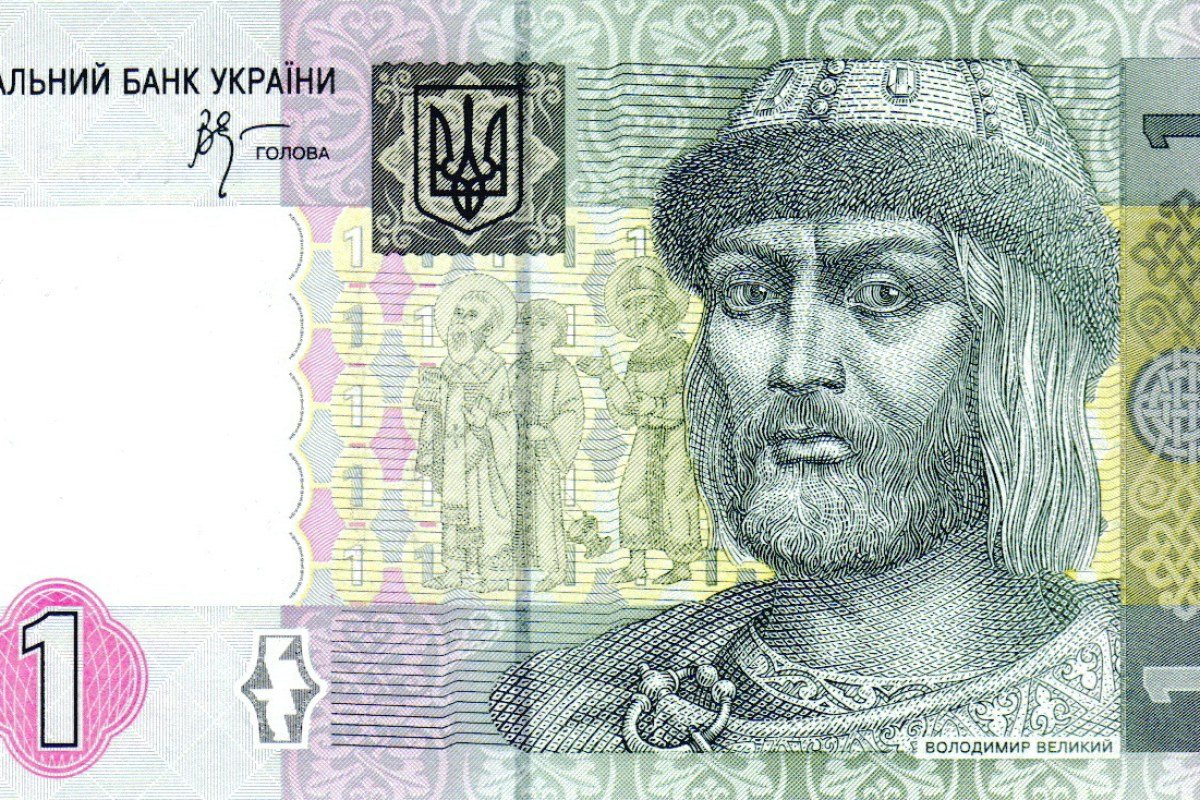
Every Ukrainian banknote carries a name that is about a thousand years old. The hryvnia, Ukraine's national currency, recalls a unit of value used in Kyivan Rus, yet as modern money it is younger than many of the people who use it. It was introduced in September 1996, after a turbulent half-decade in which Ukrainians lived through temporary coupons, hyperinflation and wallets stuffed with near-worthless notes. The story of how it came about is also a story of how an independent state built its economic institutions.
A medieval name
In Kyivan Rus the hryvnia was originally a measure of weight and value. The word is linked to the term for a neck ornament, and the hryvnia came to mean a silver ingot of a set weight used in large transactions. Kyiv hryvnias were often hexagonal, while those from other centres had different shapes. Choosing this name for the new currency was a deliberate statement of historical continuity with the medieval Kyivan state.
The name also appeared briefly during the Ukrainian People's Republic in 1918, when the short-lived state issued its own money, including notes denominated in hryvnias. Those issues disappeared after the Soviet takeover, and for most of the twentieth century Ukrainians used the Soviet rouble.
The karbovanets years
When Ukraine became independent in 1991, it could not immediately introduce a full currency. Instead, in 1992 it launched a temporary unit known officially as the karbovanets and popularly as the kupon, or coupon. At first coupons circulated alongside roubles; soon they became the only legal tender.
The early 1990s were a period of deep economic crisis. Price controls were lifted, Soviet supply chains collapsed and the government financed deficits by printing money. Inflation reached extraordinary levels, peaking in 1993 when prices rose many thousands of percent over the year. Denominations grew ever larger, and ordinary purchases required stacks of notes with long rows of zeros.
Preparing a real currency
Hryvnia banknotes were actually designed and printed well before they entered circulation. The first series, prepared in the early 1990s, was produced abroad, largely by the Canadian Bank Note Company, and stored while the government waited for the right moment. Introducing a new currency during runaway inflation would only have discredited it.
By the mid-1990s a stabilisation programme, supported by international lenders, had brought inflation down sharply. The National Bank of Ukraine, then headed by Viktor Yushchenko, judged that conditions were finally right.
The currency reform of September 1996
The reform began on 2 September 1996 and lasted about two weeks. Its main features were:
- A conversion rate of 100,000 karbovantsi to one hryvnia, which removed five zeros at a stroke.
- Parallel circulation of coupons and hryvnias for a short period, so people could use up old notes.
- Free exchange of old money for new at banks and post offices without limits or confiscation.
- Automatic conversion of bank balances, prices and wages into the new unit.
The smooth, non-confiscatory approach helped build trust, in contrast to monetary reforms in some other post-Soviet countries that wiped out savings.
Faces and symbols on the banknotes
Hryvnia banknotes form a gallery of Ukrainian history and culture. Over successive series the main portraits have included:
- Volodymyr the Great on the 1-hryvnia note, the ruler who baptised Kyivan Rus.
- Yaroslav the Wise on the 2, the lawgiver prince.
- Bohdan Khmelnytsky on the 5 and Ivan Mazepa on the 10, two Cossack hetmans.
- Ivan Franko on the 20 and Mykhailo Hrushevsky on the 50.
- Taras Shevchenko on the 100 and Lesya Ukrainka on the 200.
- Hryhorii Skovoroda on the 500 and Volodymyr Vernadsky on the 1,000.
In 2004 the currency acquired its own graphic symbol, ₴, a cursive letter with two horizontal strokes representing stability. In later years the National Bank replaced the smallest banknotes with coins, which last far longer in circulation, and introduced modernised designs with improved security features.
A currency tested by crises
Since 1996 the hryvnia has passed through several sharp devaluations, notably in 1998, 2008 and 2014, each tied to wider economic or political shocks. Yet it has remained the country's single legal tender and a recognised symbol of statehood. For many Ukrainians who remember the coupon era, the very existence of a stable, recognisable national currency is a quiet achievement of independence.
What's Your Reaction?
 Like
0
 Dislike
0
 Love
0
 Funny
0
 Wow
0
 Sad
0
 Angry
0










Comments (0)