


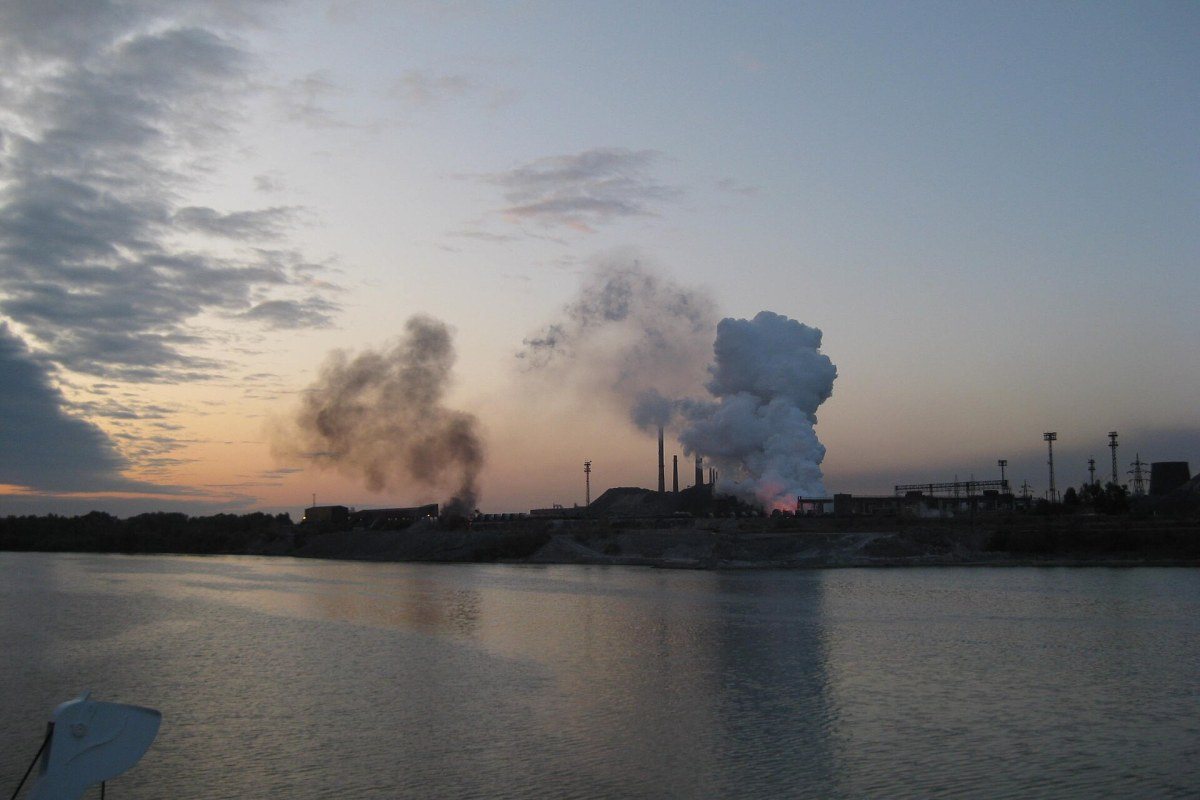
For more than a century, steel was one of the pillars of the Ukrainian economy. Blast furnaces lit up the night sky over cities in the east and south, and metal products were for many years among the country's largest exports. The rise of this industry transformed the steppe, created entire cities and shaped the lives of millions of workers. Its history combines natural resources, foreign capital, Soviet planning and the hard adjustments of the post-Soviet era.
The resource foundation
Modern steelmaking needs two things above all: iron ore and coking coal. Ukraine had both in remarkable proximity. The Kryvyi Rih basin in the centre-south of the country holds some of the largest iron ore deposits in Europe, stretching for tens of kilometres along the Inhulets River. The Donets coal basin, or Donbas, in the east provided high-quality coal suitable for making coke. Manganese, another important ingredient in steel, was mined near Nikopol. Linked by railways, these deposits made the region a natural home for heavy industry.
Hughes and the birth of Yuzovka
The first large modern ironworks on the steppe was founded in 1869 by John Hughes, a Welsh engineer and businessman, through his New Russia Company. He brought equipment and skilled workers from Britain and built a plant in an almost empty area of the Donbas. A settlement grew around it, named Yuzovka after him. It later became the city of Donetsk.
In the following decades, foreign investors from Belgium, France and Britain poured money into mines and metallurgical plants in the region. At the same time the Kryvyi Rih ore field, whose development was championed by the local entrepreneur Oleksandr Pol, was connected by rail to the Donbas coalfields. By the early twentieth century southern Ukraine had become the leading metallurgical region of the Russian Empire.
Soviet industrialisation
The Soviet five-year plans of the 1930s expanded the industry dramatically. Huge new plants were built or enlarged, many of which still bear well-known names:
- Zaporizhstal in Zaporizhzhia, powered by electricity from the new Dnipro hydroelectric station.
- Azovstal and the Illich works in Mariupol on the Sea of Azov.
- Kryvorizhstal in Kryvyi Rih, which grew into one of the largest integrated steelworks in the Soviet Union.
- Major plants in Dnipro, Kamianske, Alchevsk, Makiivka and Donetsk.
Much of this capacity was destroyed during the Second World War and rebuilt afterwards. By the late Soviet period Ukraine produced a large share of the USSR's iron and steel, and industrial cities were organised around their plants, which often provided housing, hospitals, sports clubs and holiday resorts for workers.
After independence
When the Soviet Union collapsed, Ukrainian metallurgy lost its guaranteed customers and familiar supply chains. Yet steel quickly became one of the country's main sources of export revenue, because plants could sell semi-finished products such as slabs and billets on world markets. In the 1990s and 2000s most plants were privatised, often ending up in the hands of large domestic business groups.
The most famous privatisation story involved Kryvorizhstal. First sold in 2004 in a deal widely criticised as unfair, it was returned to the state and resold in 2005 at an open, televised auction to the international steel company that became ArcelorMittal, for a price many times higher. The episode became a symbol of the difference transparent auctions could make.
Strengths and weaknesses
The industry's structure has long had clear advantages and well-known weaknesses:
- Advantages: domestic iron ore, skilled workers, access to Black Sea and Azov ports and large existing capacity.
- Weaknesses: ageing equipment, including open-hearth furnaces that lingered longer than in most of Europe, high energy consumption and heavy pollution in industrial cities.
- Market exposure: dependence on semi-finished exports made revenues highly sensitive to global steel prices.
Over the years many plants invested in converters, continuous casting and environmental upgrades, though the pace varied widely.
A legacy written into cities
The war that began in the Donbas in 2014 and the full-scale invasion of 2022 severely affected the steel heartland, and plants such as Azovstal in Mariupol became known worldwide for reasons far removed from metallurgy. Yet the industry's imprint on Ukraine remains visible everywhere: in the layout of cities like Kryvyi Rih and Zaporizhzhia, in workers' districts and palaces of culture, and in a strong engineering tradition. Discussions about the future of Ukrainian steel increasingly focus on modern, lower-emission technologies such as electric arc furnaces and direct reduced iron, which could use the country's ore while meeting stricter environmental standards.
What's Your Reaction?
 Like
0
 Dislike
0
 Love
0
 Funny
0
 Wow
0
 Sad
0
 Angry
0












Comments (0)