


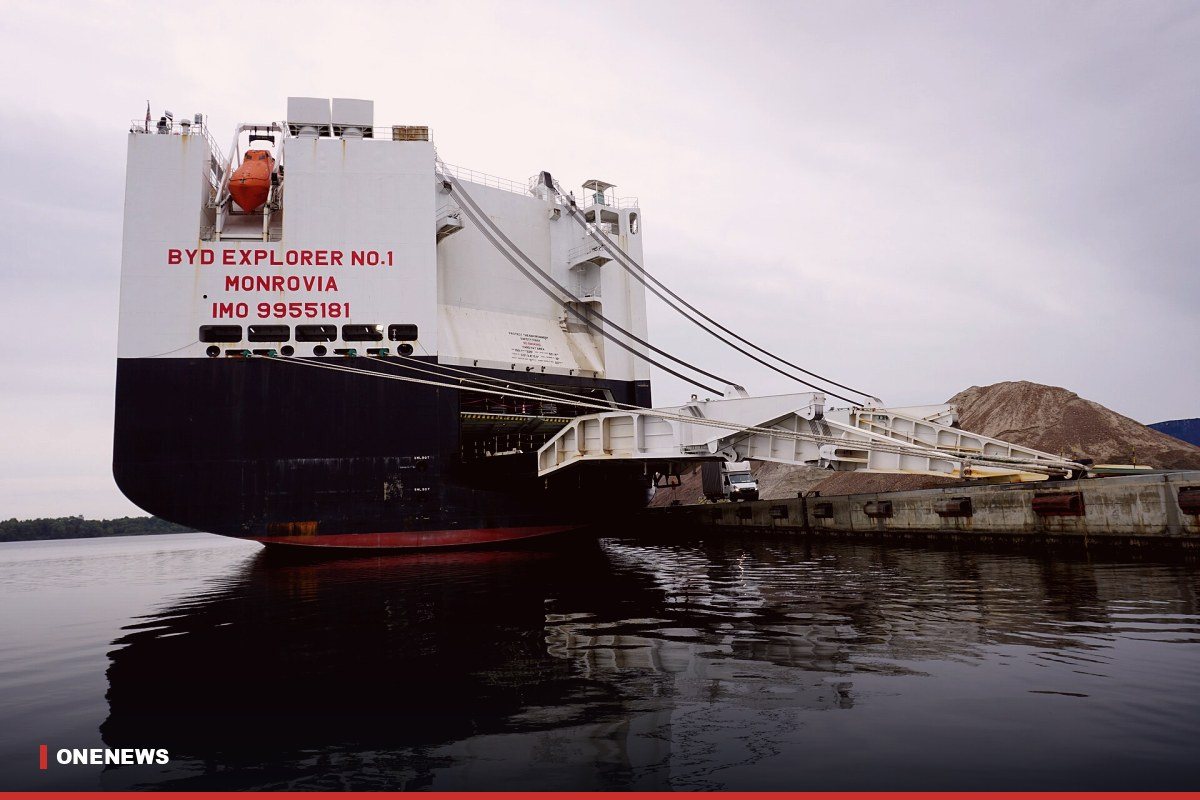


China's carmakers are leaning on foreign buyers like never before. Figures released on November 11 by the China Association of Automobile Manufacturers (CAAM) show that 606,000 new energy vehicles, meaning battery-electric cars and plug-in hybrids, left the country in October. That is 140% more than a year earlier and another monthly record, even as passenger car sales inside China continue to slide.
Record exports, weak home market
According to electrive, China sold 1.94 million new energy vehicles in October, up 13.1% year on year, and 31.2% of them were exported. Such vehicles made up 64.3% of the overall market, the fourth month in a row above 60%. The export breakdown:
- battery-electric cars: 374,000, up about 130%;
- plug-in hybrids and range extenders: 233,000, up about 160%;
- BYD sold more than 300,000 battery-electric cars in a single month for the first time.
Total passenger car exports reached about 927,000 in October, up 62.3%, the Associated Press reports, while domestic passenger car sales fell 27.4% to roughly 1.7 million. Over the first ten months, China exported more than 8 million passenger cars, against 4.8 million a year earlier, while domestic sales dropped from 19.4 million to 14.5 million.


Exports carry the global EV market
Data from Benchmark Mineral Intelligence, reported by Reuters, show global sales of electric cars and plug-in hybrids rose 8% in October to 2.09 million. Year-to-date sales stand at 17.5 million, up 5%. By region:
- Europe grew 36%, helped by subsidies, higher fuel prices and EU emissions rules;
- North America rose 24%;
- the rest of the world jumped 85%, driven largely by Chinese exports;
- China's domestic decline narrowed to 12%.
"Even though the Chinese market is down domestically, that has then in turn resulted in a lot of OEMs pushing the exports," said Charles Lester, data manager at Benchmark.
Why Chinese brands are heading abroad
Analysts quoted by AP point to cuts in some government subsidies for buyers, economic uncertainty, a bruising price war and surplus factory capacity. "Exports are becoming a central growth driver for some Chinese automakers as domestic demand remains weak," said Chris Liu, a senior analyst at Omdia. Cui Dongshu of the China Passenger Car Association expects exports to top 10 million vehicles this year.
The road ahead is getting bumpier, though. From December 1 the EU will cap imports of Chinese hybrids and plug-in hybrids at 350,000 units a year, and Beijing plans to reduce export tax rebates from next April. Some direct shipments will also be replaced by Chinese-owned factories abroad, including in Hungary and Brazil.
Beyond Europe, Chinese manufacturers are expanding quickly in Latin America, the Middle East and Southeast Asia. Analysts expect those regions to provide much of the growth in shipments over the next few years, particularly if access to Europe becomes harder because of quotas and the EU's plans to favour vehicles built inside the bloc when handing out EV subsidies.


Why it matters
Europe is China's biggest export market for passenger cars, taking around a fifth of shipments. A growing flow of affordable Chinese EVs and hybrids sharpens competition for European, Japanese and Korean brands and puts pressure on prices. For buyers that means more choice; for established carmakers it means a tougher fight for market share at a time when many are already cutting costs.
What's Your Reaction?
 Like
0
 Dislike
0
 Love
0
 Funny
0
 Wow
0
 Sad
0
 Angry
0












Comments (0)