


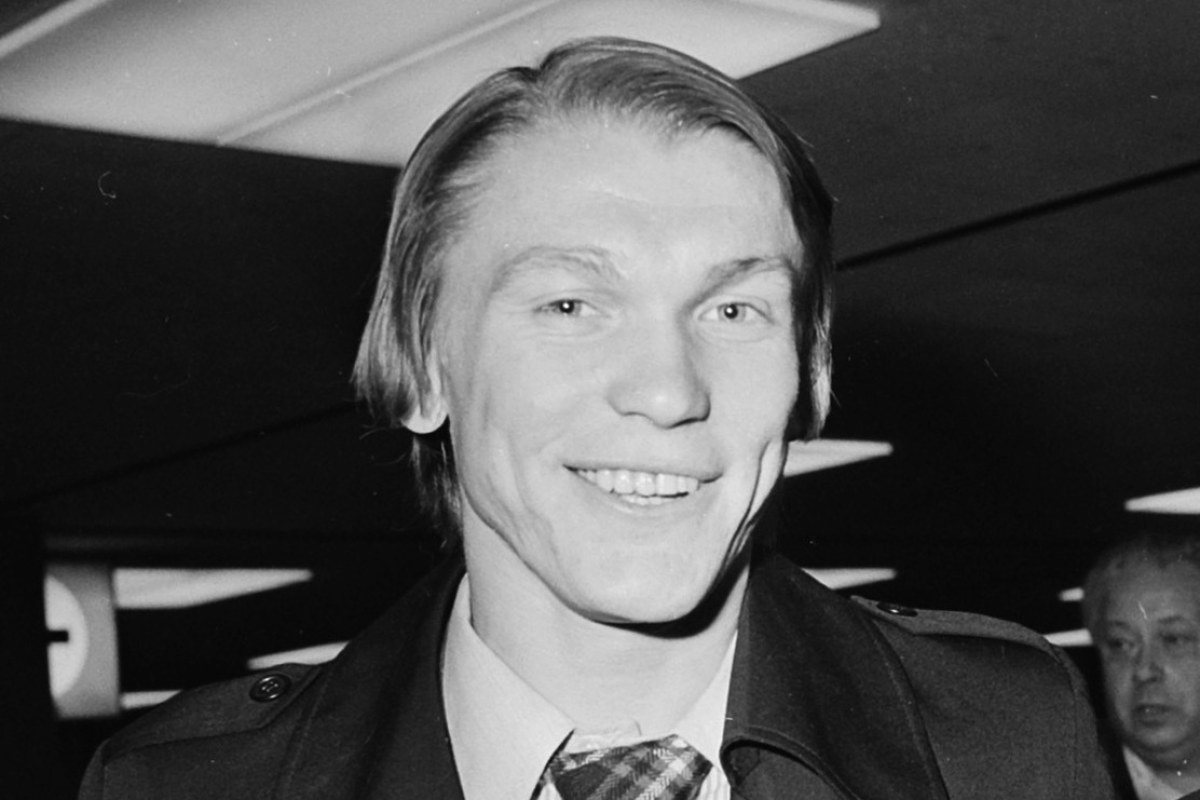
Few footballers have dominated a club's record books the way Oleh Blokhin dominates those of Dynamo Kyiv. Fast enough to compete as a sprinter and ruthless in front of goal, he was the spearhead of the team that won Kyiv's first European trophy in 1975, and in the same year he became the first Ukrainian to receive the Ballon d'Or. Later, as a coach, he would lead independent Ukraine to its first World Cup.
Speed as a Weapon
Blokhin was born in Kyiv in 1952. His mother was a sprinter and hurdler, and he inherited remarkable acceleration. As a young player he was known for running at defenders down the left wing and cutting inside to shoot. Stories that he could run 100 metres in times close to those of competitive sprinters became part of his legend.
He joined Dynamo Kyiv as a teenager and made his first-team debut in 1969. Within a few seasons he had become the most dangerous attacker in the Soviet league, and under Valeriy Lobanovskyi his pace became a central part of the team's counter-attacking style.
The Year 1975
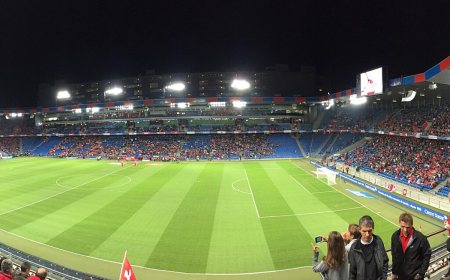
Blokhin's finest year came in 1975. Dynamo won the European Cup Winners' Cup, beating Ferencváros 3–0 in the final in Basel, with Blokhin on the scoresheet. Then, in the European Super Cup against Bayern Munich, he scored all three of Dynamo's goals across the two legs. His solo goal in Munich, in which he carried the ball from deep and beat the German defence before finishing, is still replayed in Ukraine as one of the great moments in the club's history.
At the end of the year, France Football named him European Footballer of the Year. He was the second player from the Soviet Union to win the Ballon d'Or, after the goalkeeper Lev Yashin in 1963, and the first from Ukraine.
Records and Achievements
Blokhin spent most of his playing career at Dynamo, where he won numerous Soviet league titles and domestic cups. His list of achievements includes:
- The 1975 and 1986 European Cup Winners' Cups with Dynamo Kyiv, scoring in both finals.
- The 1975 European Super Cup, with all three goals against Bayern Munich.
- The 1975 Ballon d'Or.
- Records as the all-time top scorer in the history of the Soviet top division.
- Records as the most capped player and leading scorer for the Soviet national team.
- Olympic bronze medals with the USSR at the 1972 and 1976 Games.
He also played at the 1982 and 1986 FIFA World Cups. Towards the end of his career, when Soviet rules began to allow players to move abroad, he had brief spells in Austria and Cyprus.
From Player to Coach
After retiring, Blokhin moved into coaching, spending many years in Greece, where he managed several clubs. In 2003 he was appointed head coach of the Ukraine national team, at a time when the country had never qualified for a World Cup or European Championship.
Under Blokhin, Ukraine won its qualifying group for the 2006 FIFA World Cup in Germany, finishing ahead of Turkey, Denmark and Greece. At the tournament itself, with Andriy Shevchenko as captain, Ukraine recovered from an opening defeat by Spain to reach the quarter-finals, where they lost to eventual champions Italy. It remains one of the country's best results at a major tournament.
Blokhin later coached Ukraine again and also served as head coach of Dynamo Kyiv. Outside football, he spent time in Ukraine's parliament in the late 1990s and early 2000s.
Blokhin's Place in History
Blokhin's numbers alone would make him a legend, but his significance is also symbolic. In an era when Soviet football was often associated with Moscow clubs, he made Kyiv the centre of attention and gave Ukrainian fans a world-class star of their own. Together with Ihor Belanov in 1986 and Andriy Shevchenko in 2004, he forms the trio of Ukrainian-born Ballon d'Or winners.
His direct, explosive style – running at defenders, shooting early, refusing to slow down – also helped shape the identity of Dynamo Kyiv. Generations of Ukrainian wingers and forwards have grown up hearing about the speed of Blokhin, and his records continue to stand as a benchmark for the club's attackers.
What's Your Reaction?
 Like
0
 Dislike
0
 Love
0
 Funny
0
 Wow
0
 Sad
0
 Angry
0










Comments (0)