


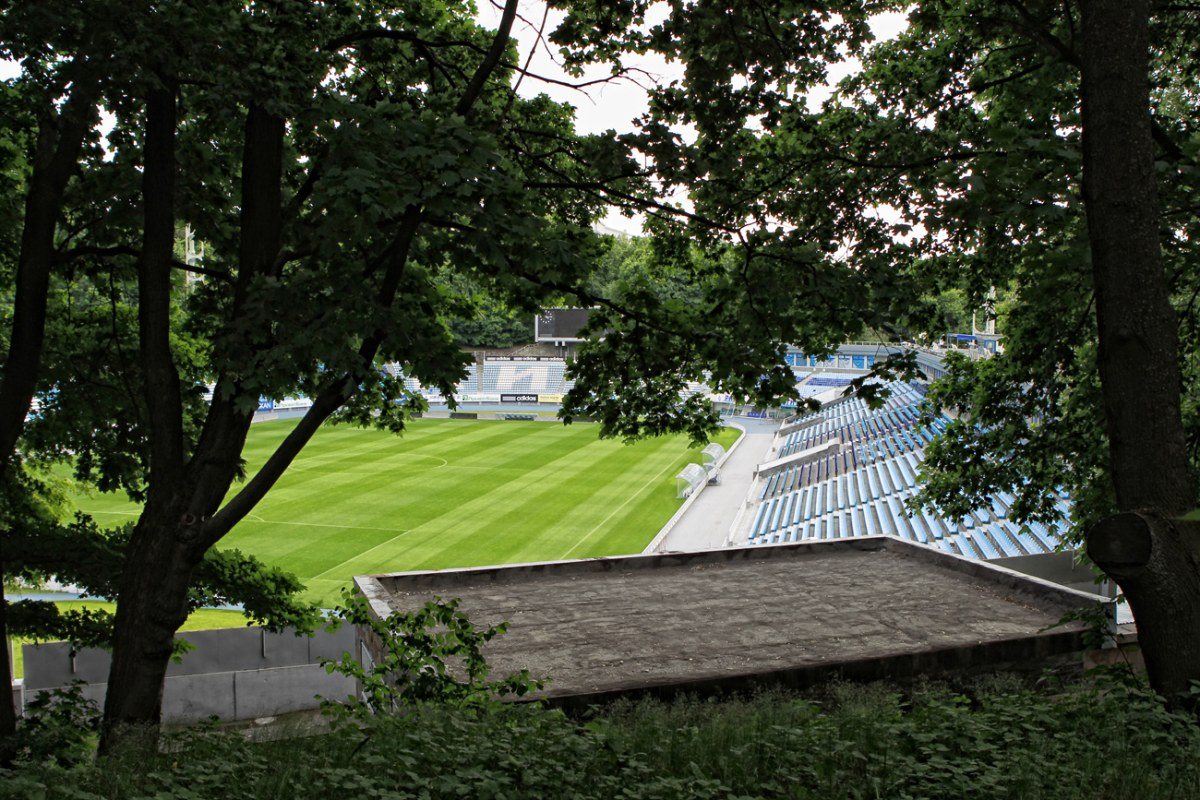
Long before data analysts, GPS vests and pressing statistics became standard in professional football, a coach in Kyiv was already treating the game as a system that could be measured and engineered. Valeriy Lobanovskyi, the stern figure on the Dynamo Kyiv bench for much of the second half of the twentieth century, built teams that won European trophies and influenced coaches far beyond Ukraine. His ideas sound familiar today precisely because they were so far ahead of their time.
From Winger to Engineer of the Game
Lobanovskyi was born in Kyiv in 1939 and played as a left winger for Dynamo, where he was known for his skill and his curling corners. Yet he also studied engineering, and that training shaped everything he later did as a coach. He saw a football team not as eleven individuals but as a dynamic system whose performance depended on how its parts interacted.
After starting his coaching career at Dnipro in Dnipropetrovsk, he returned to Dynamo Kyiv in 1973. He would lead the club in three separate spells, the last ending only with his death in 2002.
The Method: Data, Fitness and Collective Play
Lobanovskyi worked closely with Anatoliy Zelentsov, a scientist who specialised in physical conditioning and sports physiology. Together they designed training programmes based on measurements rather than tradition. Players were tested, monitored and assigned workloads according to what the numbers showed.
The key principles of his approach included:
- Recording every action – staff counted passes, tackles and errors during matches, producing performance data long before computers made this easy.
- Universal players – every outfield player was expected to attack and defend, swap positions and understand the whole system.
- Controlling space – the team aimed to make the pitch large when in possession and small when defending, an idea at the heart of modern pressing.
- Planned peaks – the season was divided into cycles so that the team reached top physical condition for the most important matches.
- Discipline over improvisation – individual talent mattered, but always within the collective plan.
He famously argued that a team's strength lay in the connections between players rather than in its stars. His sides moved as one unit, pressing opponents high up the pitch and attacking at speed.
European Triumphs with Dynamo Kyiv
The results were remarkable. In 1975 Dynamo became the first Soviet club to win a European trophy, lifting the Cup Winners' Cup after beating Ferencváros of Hungary in the final, and then defeating Bayern Munich in the European Super Cup. Eleven years later, a new generation won the Cup Winners' Cup again in 1986 with a stylish 3–0 victory over Atlético Madrid in Lyon.
Lobanovskyi also coached the Soviet national team on several occasions. His most successful campaign came at Euro 1988 in West Germany, where the USSR reached the final before losing to a Netherlands side featuring Marco van Basten and Ruud Gullit. Many of the Soviet players were from Dynamo, and the team's organisation reflected his principles.
The Final Chapter
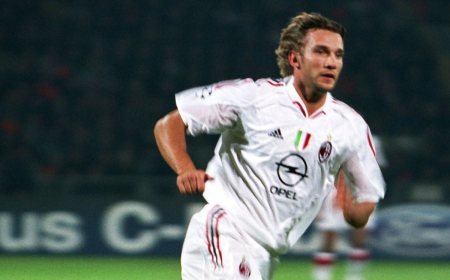
After spells working in the Gulf region in the early 1990s, Lobanovskyi returned to Dynamo Kyiv in 1997. With young stars such as Andriy Shevchenko and Serhiy Rebrov, the club once again became a force in Europe. Dynamo beat Barcelona home and away in the 1997–98 Champions League group stage and reached the semi-finals of the competition in 1999, where they were narrowly eliminated by Bayern Munich.
In May 2002, Lobanovskyi collapsed on the touchline during a match in Zaporizhzhia and died a few days later. His death was mourned across the football world. Dynamo's home ground in central Kyiv was renamed the Valeriy Lobanovskyi Dynamo Stadium, and a statue of the coach, seated on a bench as he so often was during matches, stands outside it.
Why Lobanovskyi Still Matters
Many of the ideas now associated with modern elite coaching – intense pressing, rotation of positions, sports science and statistical analysis – were part of Lobanovskyi's daily work in Kyiv decades ago. Coaches and writers who study the history of tactics often place him alongside the great Dutch innovators of "Total Football" as one of the architects of the contemporary game.
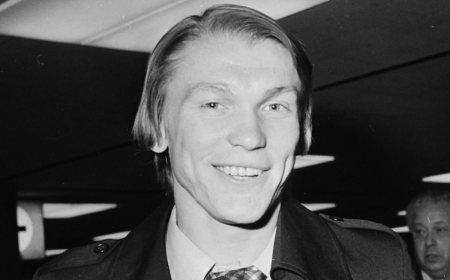
For Ukrainians, he is something more personal: the coach who proved that a club from Kyiv could beat Europe's giants through intelligence and preparation. Shevchenko, Oleh Blokhin and many others have spoken of him as the decisive influence on their careers. His legacy is visible every time a team presses as one, studies its own numbers, or treats football as a problem to be solved.
What's Your Reaction?
 Like
0
 Dislike
0
 Love
0
 Funny
0
 Wow
0
 Sad
0
 Angry
0









Comments (0)