


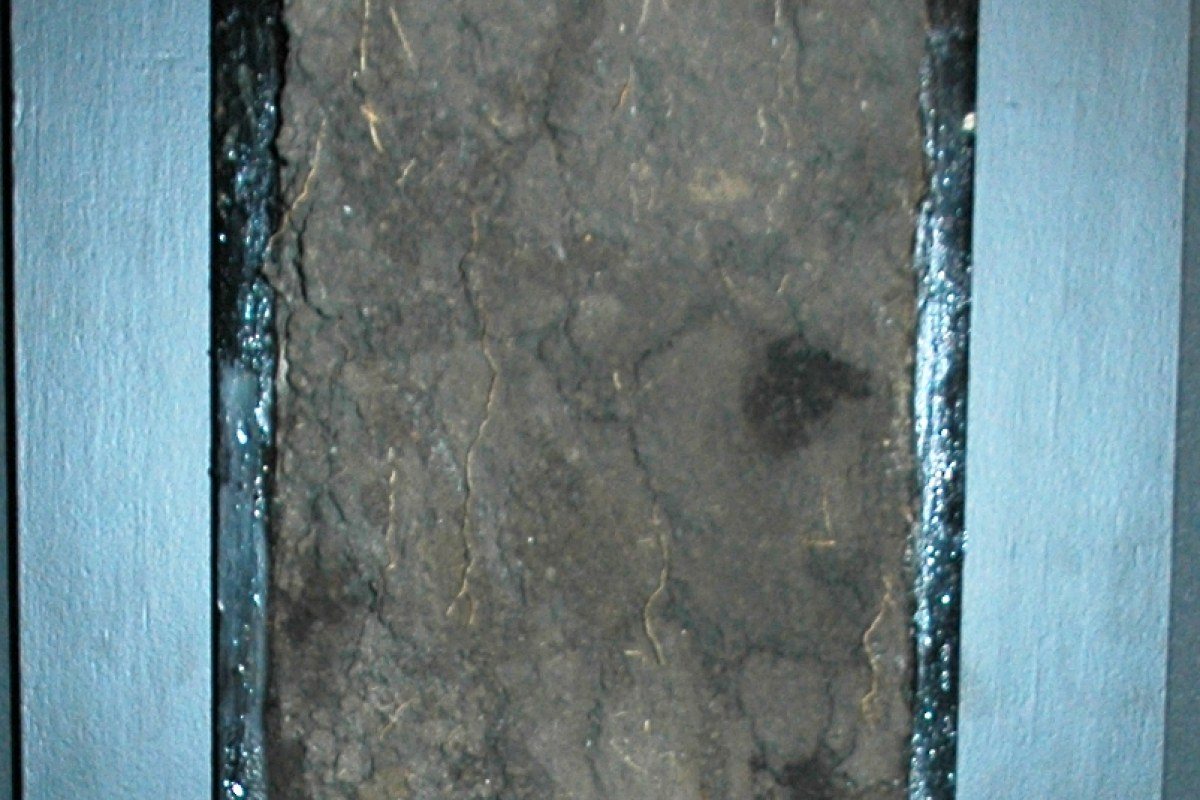
Few countries are so closely tied to a single natural resource as Ukraine is to its soil. For centuries travellers, merchants and scientists have described the dark, crumbly earth of the Ukrainian steppe with something close to admiration. That earth, known as chernozem, literally "black earth", is the main reason Ukraine has long been called the breadbasket of Europe. To understand the Ukrainian economy, its history of grain trade and even many of its historical tragedies, it helps to start from the ground up.
What chernozem actually is
Chernozem is a type of soil that forms under grassland in a temperate climate with cold winters and warm, moderately dry summers. Its defining feature is a thick upper layer rich in humus, the stable organic matter left behind when plant material decomposes. In the best Ukrainian soils this dark layer can be well over half a metre deep, and in places it reaches a metre or more. Most ordinary agricultural soils in Western Europe have a far thinner topsoil.
The colour comes from the humus itself. Organic matter binds with calcium and clay particles to create a granular structure that holds water and nutrients well while still letting roots and air move freely. Farmers describe good chernozem as soil that crumbles in the hand rather than sticking together in clods.
How the steppe built its own soil
Chernozem was not created quickly. It developed over thousands of years after the last Ice Age, when vast grasslands covered what is now southern and central Ukraine. Several conditions worked together:
- Deep-rooted grasses. Feather grass, fescue and other steppe plants grew dense root systems that died back and renewed every year, adding organic matter deep below the surface.
- A balanced climate. Rainfall was enough to grow abundant grass but not enough to wash nutrients away, so organic material accumulated instead of leaching out.
- Loess parent material. Much of the steppe sits on loess, a fine, wind-blown sediment rich in minerals and calcium carbonate, which is an excellent base for fertile soil.
- Burrowing animals. Ground squirrels, marmots and countless earthworms mixed the layers, carrying humus downward and minerals upward.
The result is a natural reservoir of fertility. Even after generations of cultivation, chernozem tends to remain productive with less input than poorer soils require, although careless farming can degrade it.
Science discovers the black earth
Chernozem played a special role in the history of soil science. In the late nineteenth century the scientist Vasily Dokuchaev, who carried out extensive field studies across the steppe, including in what is now Ukraine, used it to argue that soil is a distinct natural body shaped by climate, vegetation, parent rock, relief and time. That idea became one of the foundations of modern pedology. The word chernozem entered international scientific vocabulary and is still used in global soil classification systems today.
Ukraine has a large share of the world's chernozem belt, which stretches in a broad band from the Danube region through Ukraine and southern Russia into Kazakhstan. Similar soils occur in the North American prairies and the Argentine pampas, which is why those regions also became major grain producers.
From fertile soil to a breadbasket reputation
Good soil alone does not make a grain power; it needs a way to reach buyers. In the nineteenth century the growth of Black Sea ports such as Odesa connected Ukrainian farms with Mediterranean and Western European markets. Wheat grown on the steppe fed cities across the continent, and the phrase "breadbasket of Europe" took hold.
The same fertility made Ukrainian land a strategic prize. In the Soviet period, grain requisitions and forced collectivisation fell especially hard on Ukrainian villages, culminating in the Holodomor famine of 1932–1933. Historians often note the bitter paradox of mass starvation on some of the richest farmland in the world.
Protecting a slow-growing treasure
Soil forms at a pace measured in centuries, but it can be lost within decades. Wind erosion on open fields, water erosion on slopes, loss of humus from intensive monoculture and compaction by heavy machinery are all well-documented risks for chernozem. Agronomists commonly recommend practices such as:
- Planting shelterbelts of trees to break the wind across open plains.
- Rotating crops rather than growing the same plant year after year.
- Reducing deep ploughing and leaving crop residues on the surface.
- Returning organic matter to fields through manure, cover crops and straw.
Shelterbelts are a familiar sight in the Ukrainian countryside, lining fields in long green strips, and they are a reminder that even exceptional soil needs care.
The breadbasket label is therefore more than a slogan. It describes a geological and biological inheritance that shaped settlement patterns, trade routes, politics and culture. When people talk about Ukrainian wheat, sunflower fields or golden harvest imagery on the national flag's lower stripe, they are ultimately talking about the black earth beneath them.
What's Your Reaction?
 Like
0
 Dislike
0
 Love
0
 Funny
0
 Wow
0
 Sad
0
 Angry
0









Comments (0)