


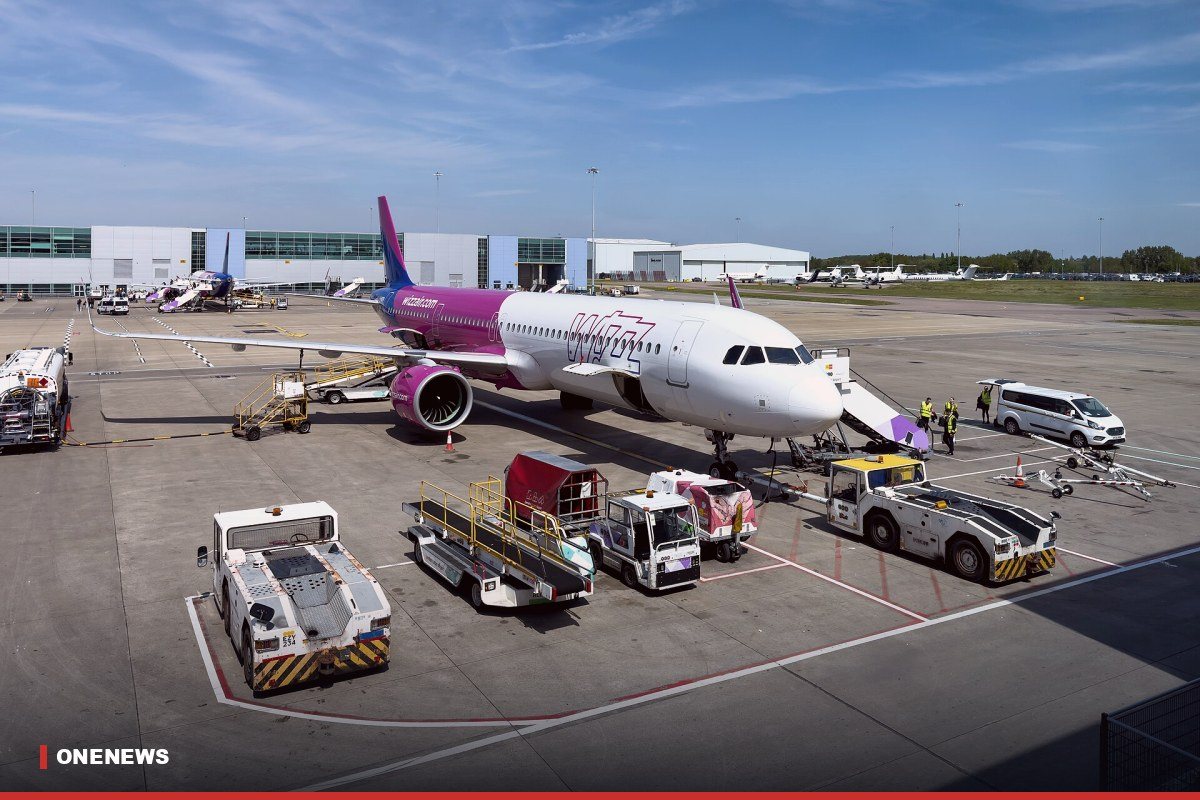


Wizz Air, the Budapest-based budget carrier, reported on 12 November that its net profit for the first half of its financial year collapsed by 67% to EUR 108.1 million, down from EUR 323.5 million a year earlier. Bloomberg and Proactive Investors both pointed to the same culprit: a sharp rise in oil and jet fuel prices.
Revenue up, profit down
On the surface the business kept growing. According to Proactive Investors, revenue for the six months to 30 September rose about 14% to EUR 3.8 billion. But the fuel bill climbed 34% to EUR 1.24 billion, swallowing most of the gain.
The key numbers:


- half-year net profit of EUR 108.1 million, down 67% year on year;
- revenue of roughly EUR 3.8 billion, up 14%;
- fuel costs of EUR 1.24 billion, up 34%;
- second-quarter net profit of EUR 306.3 million, up 7%;
- 82% of fuel needs for the second half of the financial year already hedged.
The damage was concentrated in the first quarter, when, according to Proactive Investors, disruption linked to the Middle East also weighed on fares. The summer season brought a partial recovery.
Fewer flights, higher fares
Chief executive Jozsef Varadi was blunt. "Fuel remains the main headwind," he said. Bloomberg reported that the airline has cut its winter-season capacity by around 6% compared with earlier plans, a move Varadi said is aligned with higher fuel prices and designed to protect financial results.
Passengers should brace for more expensive tickets. Varadi said fare increases are coming, with their size depending on where fuel prices go. Hedging offers some cushion: 82% of fuel needs are covered through the end of March and 51% for the summer period.
Investors were unimpressed. The shares fell 4.4% in early trading in London, extending their decline since the start of the year to 11%.
The reaction is hardly surprising. Low-cost carriers live on thin margins, cheap fares and full planes, so any jump in fuel costs hits profits quickly, and fierce competition on European routes makes it hard to pass the full increase on to passengers.


An industry-wide squeeze
Wizz Air is not alone. Ryanair, Europe's largest low-cost airline, announced efficiency measures last week to offset a EUR 2 billion increase in fuel costs expected next year.
Oil prices have stayed elevated in recent weeks amid tension around the Strait of Hormuz and uncertainty over talks between the United States and Iran. For airlines, where fuel is one of the largest cost items, that translates directly into thinner margins.
Why it matters
Wizz Air was one of the most popular airlines among Ukrainian travellers before Russia's full-scale invasion, and today it carries large numbers of passengers from airports in Ukraine's neighbours, including Poland, Romania and Hungary. A smaller winter schedule and pricier tickets will be felt by many people who rely on those border-region airports.
The bigger picture is that expensive fuel is once again a central force in the European economy. It shapes not only air travel but also logistics, inflation and consumer prices, which is why airline earnings are increasingly read as an early gauge of wider price pressures.
What's Your Reaction?
 Like
0
 Dislike
0
 Love
0
 Funny
0
 Wow
0
 Sad
0
 Angry
0














Comments (0)