


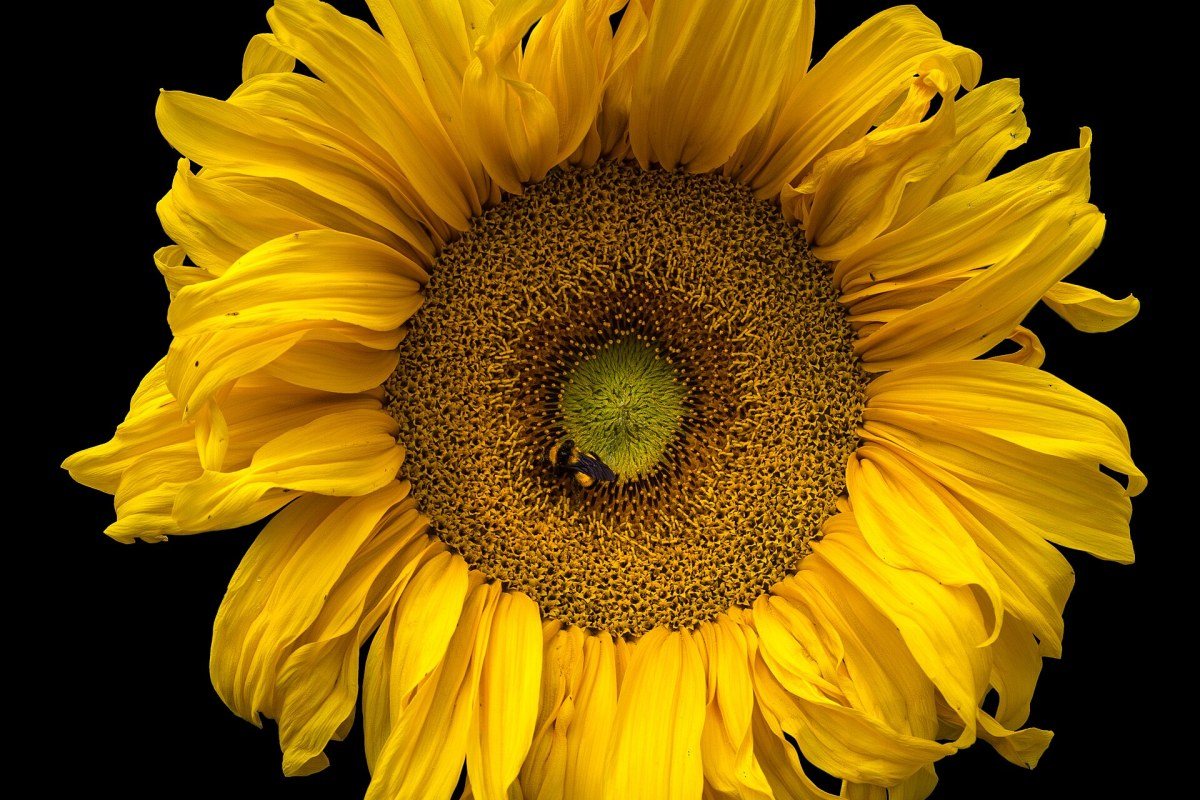
Late summer in central and southern Ukraine is painted in yellow. Fields of sunflowers stretch to the horizon, their heavy heads turning brown as the seeds ripen. The image is so familiar that many people assume the sunflower is an ancient native plant. In fact it arrived from the Americas only a few centuries ago, and its rise to become one of Ukraine's most important products is a story of folk ingenuity, plant breeding and industrial investment.
A flower from the New World
The sunflower was domesticated by Indigenous peoples in North America and brought to Europe by Spanish explorers in the sixteenth century. For a long time it was grown in gardens as an ornamental curiosity. It spread eastward across the continent and reached the lands of the Russian Empire, including Ukraine, where peasants began to eat the seeds as a snack.
The decisive change came in the first half of the nineteenth century, when farmers in the Russian Empire began pressing sunflower seeds for oil. A practical reason is often cited: under Orthodox church rules many animal fats were forbidden during Lent, but sunflower oil had not been listed among forbidden foods because it was virtually unknown when the rules took shape. A plant-based fat that could be eaten during fasting periods quickly found a market among a deeply religious population.
Breeding a better seed
Early sunflowers produced seeds with relatively low oil content. During the twentieth century plant breeders in the Soviet Union, most famously Vasily Pustovoit, worked systematically to increase it, producing varieties with much higher oil yields. These improved varieties later spread around the world and influenced sunflower breeding in other countries.
Later, hybrid sunflowers became standard. Hybrids offer more uniform plants, better resistance to diseases and parasites such as broomrape, and higher yields, which is why most modern Ukrainian farms buy hybrid seed rather than saving their own.
Why sunflowers suit Ukraine
Several features make the sunflower a natural fit for Ukrainian agriculture:
- Drought tolerance. Its deep taproot reaches moisture far below the surface, which helps in the dry south and east.
- Fertile soils. Chernozem provides the nutrients that a high-yielding oilseed crop demands.
- Long, warm summers. Sunflowers need plenty of sunshine and heat to fill their seeds.
- Profitability. For many farms it has been one of the most rewarding crops per hectare, encouraging wide planting.
Agronomists caution, however, that sunflowers draw heavily on soil moisture and nutrients. Good practice is to return to the same field only after several years, rotating with cereals and legumes in between.
The crushing industry
What really sets Ukraine apart is that it does not simply export seeds. After independence, and especially from the 2000s onward, large investments went into modern crushing plants. These facilities clean and dehull seeds, press and extract the oil, and produce two main products: crude sunflower oil and sunflower meal, a high-protein feed for poultry and livestock. Some oil is refined, deodorised and bottled for supermarkets, while much is exported in bulk.
A policy decision supported this shift. For many years Ukraine applied an export duty on sunflower seeds, which made it more attractive to process them domestically. As a result, the country became a world leader in exporting oil and meal rather than raw seed.
From field to bottle
The journey of sunflower oil typically follows these steps:
- Seeds are harvested in early autumn once the heads dry and droop.
- Grain dryers reduce the moisture so the seeds can be stored safely.
- At the crushing plant, seeds are cleaned, partly dehulled and pressed.
- Remaining oil is extracted from the press cake, leaving meal for animal feed.
- Crude oil is shipped in bulk or refined and bottled for retail.
Ukrainian kitchens have their own preference too. Many households prize unrefined, aromatic oil pressed from roasted seeds, which smells strongly of sunflower and is used to dress salads, sauerkraut and boiled potatoes. Refined oil, neutral in taste, is preferred for frying.
A symbol as much as a commodity
Today the sunflower is a widely recognised symbol of Ukraine, appearing in art, fashion and souvenirs. Behind the symbol lies a sophisticated agro-industrial chain linking farms, elevators, crushing plants, ports and buyers on several continents. The humble garden curiosity from the Americas has become one of the clearest examples of how Ukraine turns its land into value.
What's Your Reaction?
 Like
0
 Dislike
0
 Love
0
 Funny
0
 Wow
0
 Sad
0
 Angry
0











Comments (0)