


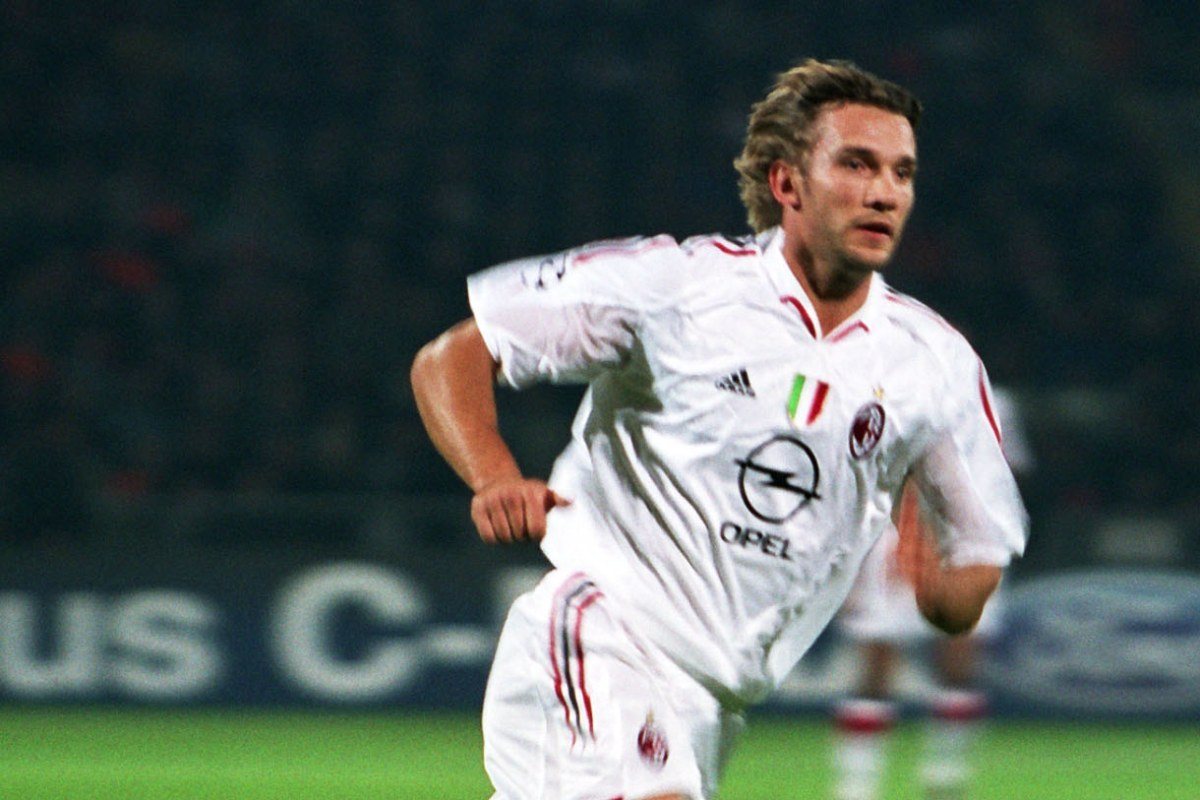
In December 2004, a striker born in a small village in the Kyiv region was named the best footballer in Europe. Andriy Shevchenko's Ballon d'Or was more than a personal prize. For a country that had been independent for barely thirteen years, it was proof that Ukrainian football could produce a player capable of standing above the very best in the world. Two decades later, Shevchenko remains the most recognisable name in the history of Ukrainian sport.
A Dynamo Kyiv Education
Shevchenko was born in 1976 and grew up in the era when Dynamo Kyiv was the pride of Soviet football. He joined the club's youth system as a boy and progressed through an academy shaped by the methods of Valeriy Lobanovskyi, the coach who believed football could be studied, measured and perfected like a science. When Lobanovskyi returned to Dynamo in the late 1990s, the young forward became the sharp point of one of the most exciting teams in Europe.
Alongside his strike partner Serhiy Rebrov, Shevchenko terrorised European defences. Dynamo dominated the Ukrainian league and, in the 1998–99 season, reached the semi-finals of the UEFA Champions League. Along the way, Shevchenko scored a famous hat-trick away at Barcelona's Camp Nou in the group stage of the previous season, a performance that announced him to the wider football world.
Milan and the Making of a Superstar
In 1999 Shevchenko moved to AC Milan, one of the most demanding environments in football. Serie A at the time was considered the strongest league in the world, famous for its disciplined, defensive style. Many foreign forwards struggled to adapt. Shevchenko did the opposite: he finished his first season as the league's top scorer, a rare achievement for a newcomer.
His game combined qualities that rarely come together in one player:
- Pace and timing – he could run in behind defenders and arrive in the box at exactly the right moment.
- Two-footed finishing – he scored with either foot, from close range or distance.
- Heading ability – despite not being a classic target man, he was dangerous in the air.
- Work rate – a product of the Lobanovskyi school, he pressed and covered ground tirelessly.
The defining moment of his Milan career came in May 2003 at Old Trafford in Manchester. The Champions League final against Juventus ended goalless after extra time and went to a penalty shoot-out. Shevchenko stepped up to take the decisive kick and calmly sent the goalkeeper the wrong way. Milan were champions of Europe, and the Ukrainian had scored the most important goal of his life.
The 2004 Ballon d'Or
The 2003–04 season brought Milan the Italian league title, with Shevchenko once again finishing as Serie A's leading scorer. He also scored in the UEFA Super Cup, which Milan won in 2003. When France Football announced its Ballon d'Or in late 2004, Shevchenko came out on top, ahead of Barcelona's Deco and Ronaldinho.
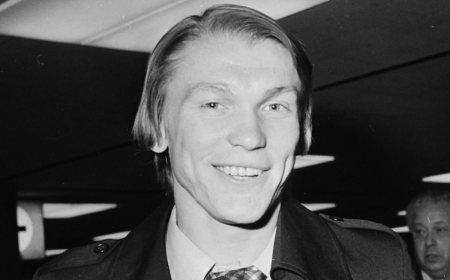
He became only the third player from Ukraine to win the award, after Oleh Blokhin in 1975 and Ihor Belanov in 1986 – but the first to do so as a citizen of an independent Ukraine. He dedicated the trophy to his homeland and brought it to Kyiv, where he laid it at the grave of Lobanovskyi, his late mentor. In Ukraine the moment was treated almost as a national holiday.
Chelsea, Return to Kyiv and the National Team
In 2006 Shevchenko joined Chelsea in a high-profile transfer. His time in London was less successful, hampered by injuries and changes in the team's style, although he still won domestic cup trophies. After a loan spell back at Milan, he returned to Dynamo Kyiv in 2009, closing the circle where his career had begun.
For the national team, Shevchenko was the captain and talisman of a generation. He led Ukraine to its first major tournament, the 2006 FIFA World Cup in Germany, where the team reached the quarter-finals. His final international appearances came at Euro 2012, co-hosted by Ukraine and Poland. In the opening match against Sweden in Kyiv, the 35-year-old scored both goals with two headers in a 2–1 win – a farewell that many Ukrainian fans consider the most emotional night in the country's football history. He retired as Ukraine's all-time leading scorer.
A Lasting Legacy
After his playing career, Shevchenko briefly entered politics and later turned to coaching. As head coach of the national team from 2016 to 2021, he guided Ukraine to the quarter-finals of Euro 2020, matching the best tournament result of the side he had once captained.
His importance goes beyond goals and trophies. Shevchenko showed a generation of Ukrainian children that a player from their country could become the best in Europe without leaving his identity behind. Statues, murals and football schools carry his name, and every young forward who emerges from Ukraine is still measured, fairly or not, against the striker who lifted the Ballon d'Or in 2004.
What's Your Reaction?
 Like
0
 Dislike
0
 Love
0
 Funny
0
 Wow
0
 Sad
0
 Angry
0









Comments (0)