


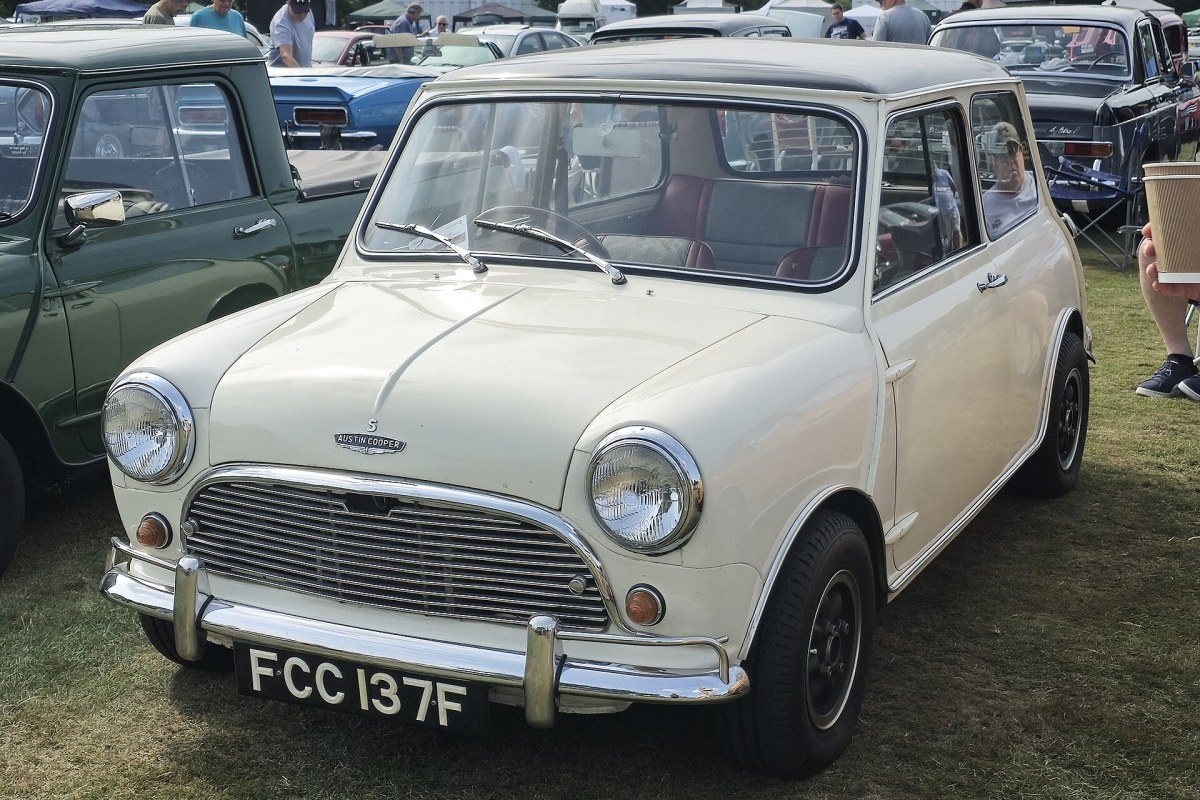
The original Mini is a car that changed how engineers think about small cars. Launched by the British Motor Corporation in 1959, it seated four adults in a body barely three metres long, thanks to a radical layout that placed the engine sideways and drove the front wheels. That arrangement became the standard for most small and medium cars in the world. Along the way the Mini also won major rallies, became a fashion symbol of the 1960s and starred in films.
A Response to a Fuel Crisis
In 1956 the Suez crisis led to fuel rationing in Britain, and demand grew for very small, economical cars. Many buyers turned to so-called bubble cars, often imported from Germany. BMC's chairman wanted a proper small car that could beat them, and he gave the task to engineer Alec Issigonis.
Issigonis and his small team were given strict constraints: the car had to use an existing BMC engine and fit four adults and their luggage into the smallest possible space. The solution they found was ingenious.
The Engineering Breakthrough
The Mini's key innovations worked together to maximise interior space:
- A transverse engine, mounted sideways across the front of the car instead of lengthways.
- The gearbox in the sump, located underneath the engine and sharing its oil, which shortened the engine bay further.
- Front-wheel drive, eliminating the transmission tunnel that intrudes into the cabin of rear-wheel-drive cars.
- Tiny 10-inch wheels pushed to the corners, which reduced intrusion into the cabin and improved stability.
- Rubber cone suspension, developed with engineer Alex Moulton, which was compact and gave the car its famous go-kart handling.
Around 80 percent of the car's footprint was available for passengers and luggage, a figure frequently cited by admirers of the design. Storage bins in the doors and under the rear seats made the most of every space.
Austin, Morris and Cooper
The car was initially sold as the Austin Seven and the Morris Mini-Minor, reflecting the two brands within BMC. The name Mini eventually became the car's identity. Early sales were slower than expected, partly because buyers were unsure about such an unconventional car, but its reputation grew quickly as people discovered its practicality and fun.
The racing car builder John Cooper, a friend of Issigonis, saw the Mini's potential as a performance car. The resulting Mini Cooper and the more powerful Cooper S used tuned engines and improved brakes. They transformed the Mini from a sensible economy car into a giant-killer.
Monte Carlo Rally Victories
The Mini Cooper S won the Monte Carlo Rally in 1964, 1965 and 1967. It also crossed the line first in 1966, but the team was disqualified over a technical ruling about its headlights, a decision that remains controversial among fans. The victories over much larger and more powerful cars made the Mini famous across Europe.
A Symbol of the Swinging Sixties
In the 1960s the Mini became fashionable far beyond motoring circles. Musicians, actors, models and royalty were seen driving them, and the car became associated with the youthful energy of London at the time. The 1969 film The Italian Job, featuring a memorable chase with three Minis, cemented the car's place in popular culture.
The Mini also appeared in many variants, including an estate, a van, a pick-up and the open-sided Mini Moke, as well as upmarket versions badged as the Riley Elf and Wolseley Hornet.
A Long Production Life
The original Mini outlived several cars intended to replace it. Despite changes in ownership of the British car industry, it remained in production at Longbridge until 2000, with more than five million built over its life. Late models received fuel injection, airbags and other updates, but the basic design remained remarkably faithful to the original.
In 2001 BMW, which had acquired the brand, launched a new MINI. Larger and far more modern, it borrowed the original's styling cues and spirit and proved a major commercial success.
The Mini's Lasting Influence
The original Mini's greatest legacy is its layout. Today, the transverse engine and front-wheel drive arrangement it popularised underpin a huge share of the world's cars. Few designs have had such a profound effect on everyday motoring, and few small cars have inspired as much affection.
What's Your Reaction?
 Like
0
 Dislike
0
 Love
0
 Funny
0
 Wow
0
 Sad
0
 Angry
0










Comments (0)