


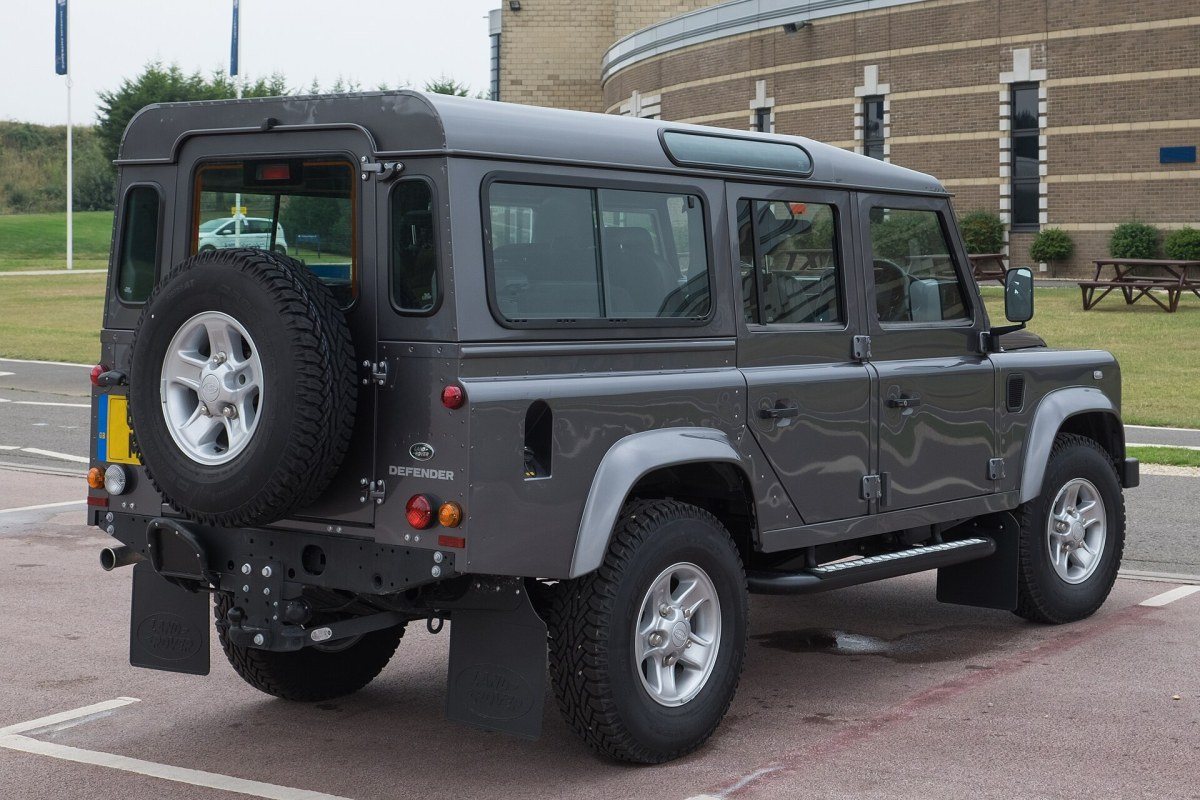
The Land Rover began as a stopgap. In the austere years after the Second World War, the British car maker Rover needed a product it could build and export quickly. The result was a simple, rugged four-wheel-drive utility vehicle that went on to serve farmers, armies, aid workers and explorers across the globe. Its descendants, eventually named the Defender, remained in production for almost seven decades in recognisably similar form.
Born From Post-War Necessity
Rover's chief designer, Maurice Wilks, used an ex-military American Jeep on his farm in Wales and saw the need for a similar vehicle for agricultural use. According to a popular story, the first outline of the Land Rover was sketched in the sand of a beach in Anglesey. Whether or not every detail of the legend is accurate, the concept was clear: a light, tough, versatile machine that could plough a field, carry goods and drive power tools.
Steel was rationed in post-war Britain, but aluminium alloy was more readily available. The Land Rover's body panels were therefore made largely of aluminium, which also resisted corrosion, a quality that helped many vehicles survive for decades. Early examples were often painted in surplus military green.
The Series Years
The Land Rover was unveiled at the Amsterdam Motor Show in 1948 and was an immediate success. It was soon in demand around the world, from British farms to colonial administrations, mining companies and armies. The original model, retrospectively called the Series I, was followed by the Series II in 1958 and the Series III in 1971.
Characteristics of the Series vehicles included:
- a strong steel ladder chassis beneath aluminium body panels;
- leaf-spring suspension and solid axles;
- selectable four-wheel drive and low-range gearing;
- a power take-off option for running agricultural machinery;
- countless body styles, from pick-ups and station wagons to fire engines and ambulances.
Comfort was minimal, but durability and repairability were outstanding. A Series Land Rover could be fixed with basic tools in remote places, which made it a favourite of expeditions and humanitarian organisations.
Coil Springs and the Defender Name
In the early 1980s Land Rover introduced the One Ten and later the Ninety, named after their approximate wheelbase lengths in inches. They brought coil-spring suspension and permanent four-wheel drive, borrowed in principle from the Range Rover, which greatly improved both comfort and off-road capability.
When the company launched the Discovery in 1989, it needed a clearer name for its utility model. From 1990 the vehicle became the Land Rover Defender, with the Defender 90 and Defender 110 as the main versions, along with a longer 130.
A Military and Expedition Favourite
The Defender and its predecessors served with many armed forces, including the British Army, and were adapted for patrol, communications and support roles. They also became the vehicle of choice for long-distance overland journeys, safaris and humanitarian missions, earning a reputation as a vehicle that could go almost anywhere.
The End of an Era
By the 2010s the classic Defender faced tightening safety and emissions regulations that its decades-old design could not easily meet. Production at the Solihull factory in England ended in January 2016, closing a remarkable chapter of continuous manufacture that stretched back to 1948.
The end of production prompted a wave of nostalgia. Values of classic Land Rovers rose, and a thriving industry emerged around restoring and modifying old Defenders and Series vehicles.
A New Defender
In 2020 Land Rover launched an all-new Defender, built in Slovakia. It shares the name and some styling cues, such as the upright profile and the side-hinged rear door with a spare wheel, but uses modern monocoque construction, independent suspension and advanced electronics. The new model divided opinion among traditionalists but brought the name to a much wider audience.
Why the Defender Matters
The Land Rover's legacy rests on its honesty and usefulness. It was designed to work, not to impress, yet it became one of the most recognisable vehicles in the world. Its history reflects a shift from tool to icon, and old Series and Defender models remain at work on farms and in remote regions long after they left the factory.
What's Your Reaction?
 Like
0
 Dislike
0
 Love
0
 Funny
0
 Wow
0
 Sad
0
 Angry
0









Comments (0)