


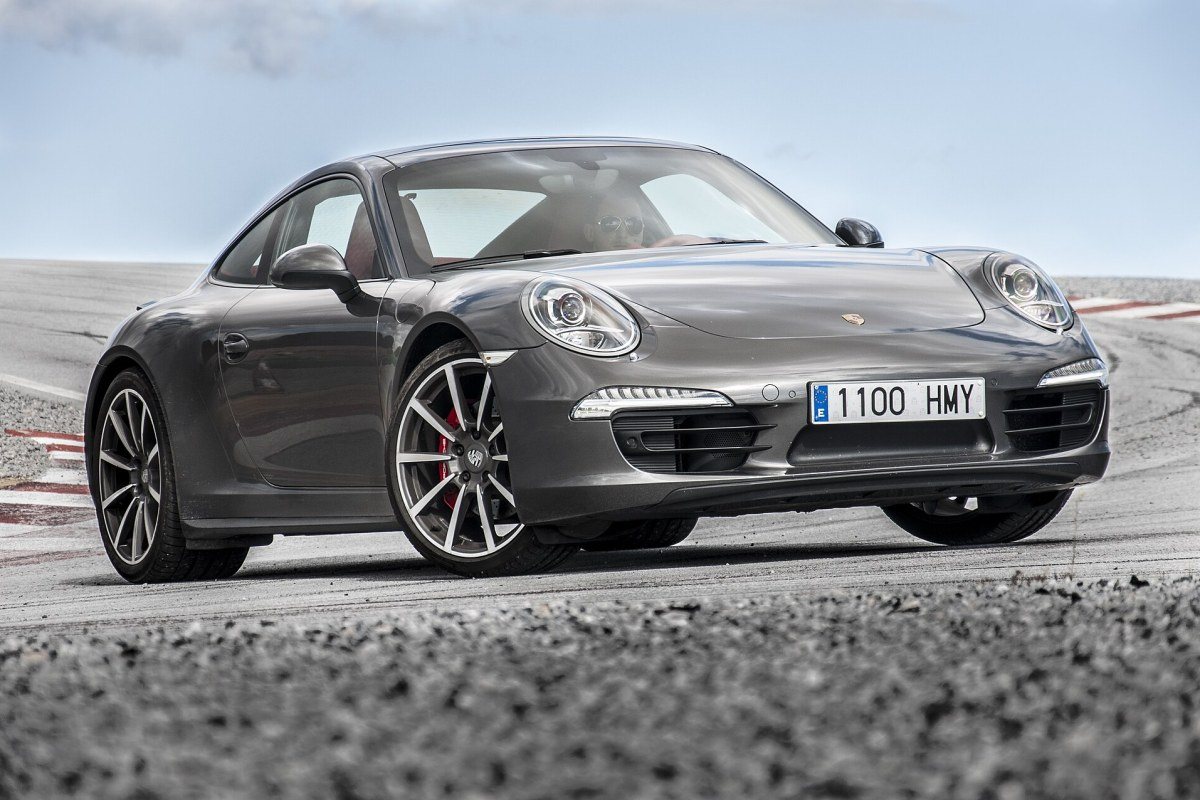
The Porsche 911 is one of the very few cars whose silhouette has remained recognisable for more than sixty years. Its sloping roofline, round headlights and engine mounted behind the rear axle have been refined generation after generation, but never abandoned. In the process, the 911 has become a benchmark for sports cars, a winner on race tracks and rally stages, and a symbol of engineering persistence.
Replacing the 356
Porsche's first production car, the 356, had established the young company's reputation in the 1950s. By the early 1960s it needed a successor that was more powerful, more comfortable and more spacious. The design was led by Ferdinand Alexander Porsche, grandson of the company's founder, who created a clean, elegant fastback shape.
The new car was presented at the Frankfurt Motor Show in 1963 under the name 901. However, Peugeot claimed rights to three-digit car names with a zero in the middle, and Porsche changed the name to 911 before sales began. The number has stayed ever since.
An Unconventional Layout
The 911's defining feature is its engine position. A flat-six "boxer" engine sits behind the rear axle, an arrangement that gives strong traction under acceleration and braking but can make the car's handling demanding at the limit. Early 911s gained a reputation for tricky behaviour if driven carelessly, and much of the model's later development focused on taming that tendency with improvements to suspension, tyres and electronics.
For more than three decades, the engine was air-cooled, giving the classic 911 its distinctive sound. That era ended in the late 1990s, when the 996 generation introduced a water-cooled engine to meet rising demands for power, emissions control and refinement. The change was controversial among purists, but it allowed the car to keep evolving.
Generations at a Glance
Enthusiasts usually refer to 911 generations by their internal codes. A simplified overview:
- The original 911 (1963–1989 in various forms): including the "G-series" impact-bumper cars of the 1970s and 1980s.
- 930 Turbo: launched in the mid-1970s, one of the first turbocharged production sports cars, with flared wheel arches and a large rear spoiler.
- 964: a heavily modernised car that introduced all-wheel drive in the Carrera 4.
- 993: the last air-cooled 911, now highly prized by collectors.
- 996 and 997: the first water-cooled generations, followed by a return to round headlights.
- 991 and 992: larger, more technologically advanced cars, including hybrid assistance in some recent versions.
Proven in Competition
Motorsport has always been central to the 911's identity. Versions of the car have competed in rallies, endurance races and countless club events. The 911 achieved success in events such as the Monte Carlo Rally in its early years and later formed the basis of racing cars that competed at Le Mans and in GT championships worldwide.
Porsche has also used racing to justify road-going specials. Models such as the Carrera RS 2.7 of the early 1970s and the later GT3 and GT2 variants brought track-focused engineering to customers, while one-make series such as the Porsche Carrera Cup gave young drivers a route into professional racing.
A Car for Many Roles
Part of the 911's appeal is its breadth. It has been offered as a coupé, a Targa with a removable roof panel and a cabriolet, with rear-wheel or all-wheel drive, and with characters ranging from comfortable grand tourer to uncompromising track car. Many owners use their 911s every day, something not true of many high-performance cars.
Why the 911 Endures
The 911's longevity is unusual in an industry built on regular reinvention. Several factors help explain it:
- A strong identity that customers recognise instantly and do not want changed.
- Continuous improvement rather than radical replacement.
- Motorsport credibility that informs road cars.
- Everyday usability, with small rear seats and a usable front luggage compartment.
Porsche celebrated the production of the one-millionth 911 in 2017, a remarkable figure for a premium sports car. The 911 has proved that a design can mature over decades without losing its soul, and it remains the car most people picture when they hear the name Porsche.
What's Your Reaction?
 Like
0
 Dislike
0
 Love
0
 Funny
0
 Wow
0
 Sad
0
 Angry
0








Comments (0)