


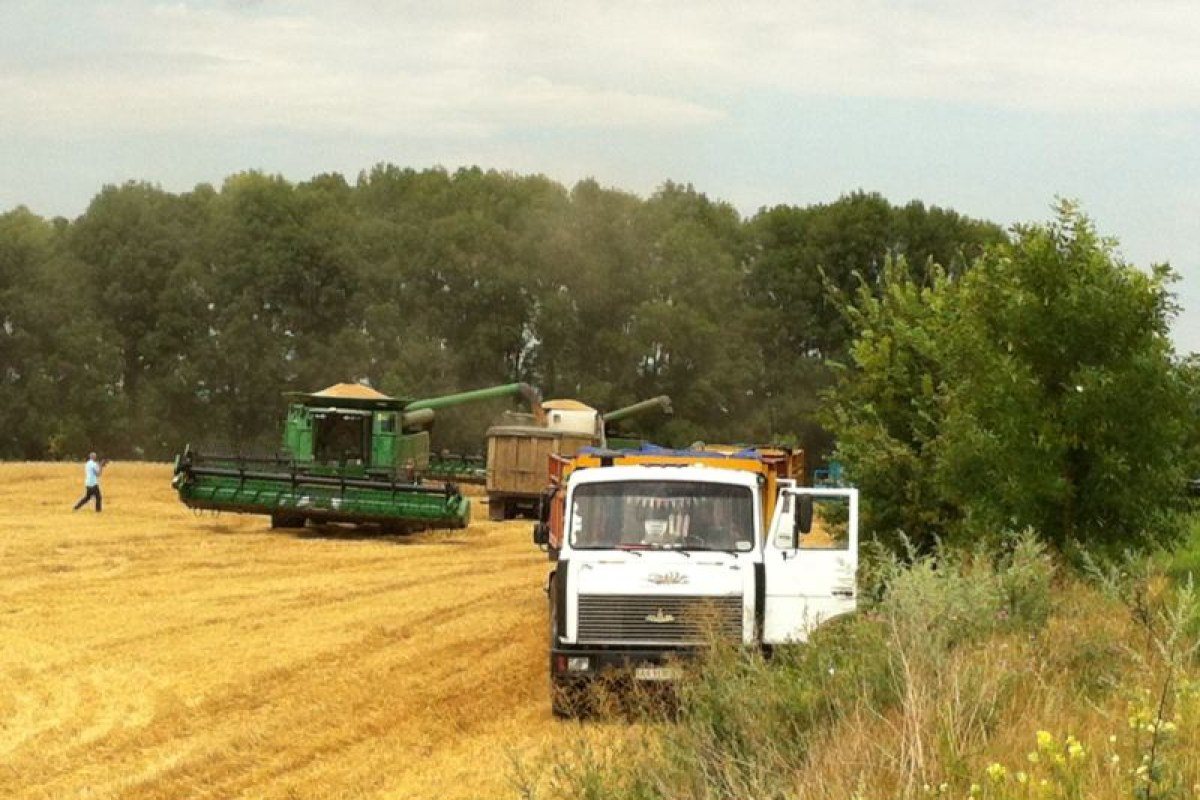
When international markets talk about Ukraine, three products come up again and again: wheat, corn and sunflower oil. Together with barley, rapeseed and soybeans, they form the backbone of the country's agricultural exports and have made Ukraine one of the notable suppliers in global food trade. Each crop has its own geography, calendar and buyers, and understanding them explains a great deal about how the Ukrainian rural economy works.
Wheat: the historic staple
Wheat is the crop most associated with Ukraine's breadbasket image. Most Ukrainian wheat is winter wheat, sown in autumn, dormant under snow through the winter and harvested in high summer, usually in July. The southern and central regions, with their chernozem soils and long warm summers, are traditional wheat lands.
Ukrainian wheat is generally sold as milling wheat for bread and as feed wheat for livestock, with quality classes determined by protein content, gluten and other parameters. Typical buyers have included countries in North Africa, the Middle East and South and Southeast Asia, where bread and flatbread are dietary staples and domestic production does not cover demand. Because those markets are price-sensitive, Ukraine's comparatively low production costs and short sea route through the Black Sea have been important advantages.
Corn: the quiet giant
Corn, or maize, receives less public attention than wheat but in many seasons has rivalled or exceeded it in export volume. It is a spring-sown crop, planted around April and May and harvested in autumn, often into October and November. Corn needs more warmth and moisture than wheat, so production is concentrated in central and northern regions where rainfall is more reliable.
Most exported Ukrainian corn is used as animal feed. It has been shipped widely to the European Union, China and other Asian and Middle Eastern buyers. The spread of modern hybrids, precision planting and grain dryers over recent decades turned corn from a secondary crop into one of the most important sources of farm income.
Sunflower oil: Ukraine's signature product
If wheat is the historic symbol, sunflower oil is the product where Ukraine has been most dominant. For many years the country has been among the world's leading producers and exporters of sunflower oil, often ranked first. Endless yellow fields of sunflowers in late summer are one of the most recognisable images of the Ukrainian countryside.
Unlike wheat and corn, which are mostly exported as raw grain, sunflower seeds are largely processed at home. Crushing plants press the seeds into crude oil and sunflower meal, a protein-rich feed. Exporting oil rather than seeds keeps more value inside the country, and over time Ukraine built a large crushing industry near the main growing regions and ports.
How the export chain works
All three products move through a similar chain from field to ship:
- Harvest and drying. Grain is brought from the field and, when necessary, dried to a safe moisture level so it does not spoil.
- Storage at elevators. Inland elevators clean, grade and store grain until it is sold.
- Transport. Rail wagons, trucks and river barges carry grain to port terminals, with rail historically handling a large share.
- Port terminals. Terminals on the Black Sea and the Danube load bulk carriers bound for foreign buyers.
- Trading and finance. International traders, local agroholdings and banks arrange contracts, insurance and payment.
Sunflower oil follows a variant of this route, travelling in tanks and being loaded at specialised liquid-cargo terminals.
Other crops worth knowing
Several other crops complete the picture:
- Barley, used for feed and malting, has traditionally been exported to the Middle East and China.
- Rapeseed is a valuable oilseed sold largely to the European Union, where it is used for vegetable oil and biodiesel.
- Soybeans have grown in importance, particularly in western and central regions with higher rainfall.
Why these crops matter beyond Ukraine
Because Ukrainian grain and oil reach many import-dependent countries, disruptions to Ukrainian harvests or shipping routes tend to ripple through world food markets. That is why the country's farm output is followed closely by traders, humanitarian agencies and governments far from Europe. For Ukraine itself, these crops have long been among the largest sources of foreign currency earnings and rural employment.
The balance between the crops shifts from year to year depending on weather, prices and logistics, but the basic pattern is stable: winter wheat and barley harvested in summer, corn and sunflower in autumn, and a steady stream of trains and ships carrying the results of Ukraine's black earth to kitchens and farms around the world.
What's Your Reaction?
 Like
0
 Dislike
0
 Love
0
 Funny
0
 Wow
0
 Sad
0
 Angry
0













Comments (0)