


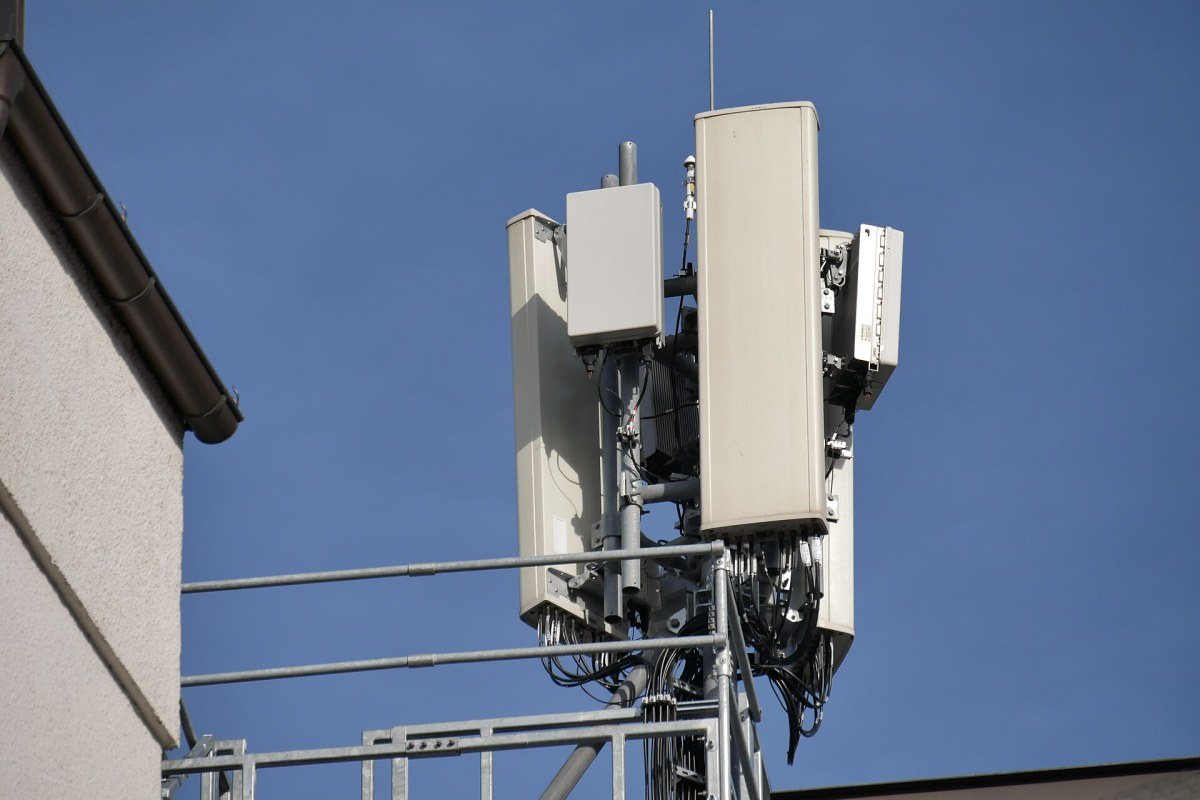
Every decade or so, mobile networks take a generational leap. The first generation carried analogue voice, the second brought digital calls and text messages, the third made mobile internet practical and the fourth turned smartphones into streaming devices. The fifth generation, known simply as 5G, is designed to do something broader: to connect not only phones but also sensors, vehicles, factory machines and city infrastructure, all with higher speed, lower delay and far greater capacity. To understand how it achieves this, it helps to look at three things – the radio spectrum it uses, the antennas that send the signal and the way the network behind those antennas is organised.
Radio waves and the spectrum puzzle
All mobile networks send data through the air as radio waves. Each wave has a frequency, measured in hertz, and the range of available frequencies is called the spectrum. Governments divide the spectrum into bands and license them to operators. The basic trade-off is simple: lower frequencies travel further and pass through walls more easily, while higher frequencies can carry much more data but fade quickly and are easily blocked.
5G uses three broad groups of frequencies:
- Low-band (below about 1 GHz) – wide coverage, good indoor reach, but speeds only moderately better than 4G.
- Mid-band (roughly 1–6 GHz, with the 3.5 GHz range especially common in Europe) – the practical "sweet spot" that balances coverage and capacity.
- High-band or millimetre wave (around 24 GHz and above) – enormous capacity and very high peak speeds, but a range measured in hundreds of metres and easily blocked by buildings, trees and even a human hand.
Most people who use 5G in daily life are connected through mid-band or low-band signals. Millimetre wave is mainly deployed in dense places such as stadiums, transport hubs and city centres, where many users compete for bandwidth in a small area.
Smarter antennas: massive MIMO and beamforming
A key innovation in 5G is not the frequency itself but how antennas use it. Traditional base stations broadcast in broad sectors, like a lighthouse sweeping light across the sea. 5G base stations often use massive MIMO – "multiple input, multiple output" – which means dozens of small antenna elements packed into a single panel.
By carefully adjusting the timing and strength of the signal from each element, the station can shape the radio energy into focused beams aimed at individual users. This technique, called beamforming, has several advantages. Less energy is wasted on empty space, the signal reaching each device is stronger, and the same frequencies can be reused for several users at once because their beams point in different directions. In practice, this multiplies the capacity of a single site without needing more spectrum.
Small cells and network density
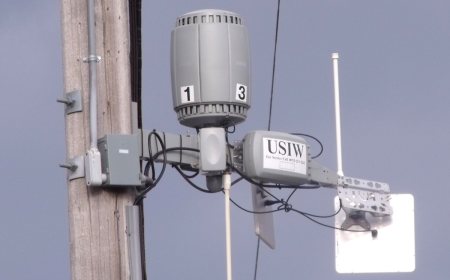
Because higher frequencies do not travel far, 5G relies more heavily on small cells – compact base stations mounted on lamp posts, building walls or indoor ceilings. Instead of one tall tower covering several kilometres, an urban area may have many small cells, each serving a street or a block. More cells mean each one shares its capacity among fewer users, which keeps speeds high even in crowded places.
Small cells still need to be connected to the wider network, usually by fibre-optic cable or by high-capacity wireless links. This is one reason 5G rollout takes time: the visible antennas are only part of the job, and laying fibre to every site is often the slowest and most expensive step.
A new core: software, slicing and low latency
Behind the antennas sits the core network, which handles authentication, routing and connections to the internet. In 5G, the core is designed to run largely as software on standard servers rather than on specialised hardware. This makes it more flexible and enables a feature called network slicing.
Network slicing lets an operator divide one physical network into several virtual networks, each tuned for a different purpose. One slice might prioritise high bandwidth for video, another might guarantee very low delay for industrial robots, and a third might handle millions of low-power sensors that send small amounts of data occasionally. The 5G standards describe these three broad use cases as enhanced mobile broadband, ultra-reliable low-latency communication and massive machine-type communication.
Latency – the time it takes for data to travel from a device to its destination and back – is another focus. 5G's radio design shortens the time slots used for transmission, and operators can place computing resources closer to users through so-called edge computing. Together, these measures reduce delays, which matters for applications such as remote control of machinery, augmented reality and vehicle communication.
Standalone versus non-standalone 5G
Many early 5G networks were launched in "non-standalone" mode. In this setup, a 5G radio works alongside an existing 4G network, which still handles signalling and the core functions. It allowed a quick launch but did not unlock every 5G feature. "Standalone" 5G uses a dedicated 5G core and makes advanced capabilities such as network slicing fully available.
What 5G means in everyday life
For a typical smartphone user, the most noticeable benefits are faster downloads, smoother video in busy places and more consistent performance when many people are online at once. The bigger changes happen out of sight: in automated ports and warehouses, factories with private 5G networks and energy systems full of connected sensors.
5G is not a single invention but a combination of ideas – wider spectrum, smarter antennas, denser networks and a software-driven core. Understanding those building blocks makes it easier to separate genuine capabilities from marketing hype, and to see why mobile networks will keep evolving long after the label "5G" becomes familiar.
What's Your Reaction?
 Like
0
 Dislike
0
 Love
0
 Funny
0
 Wow
0
 Sad
0
 Angry
0











Comments (0)