


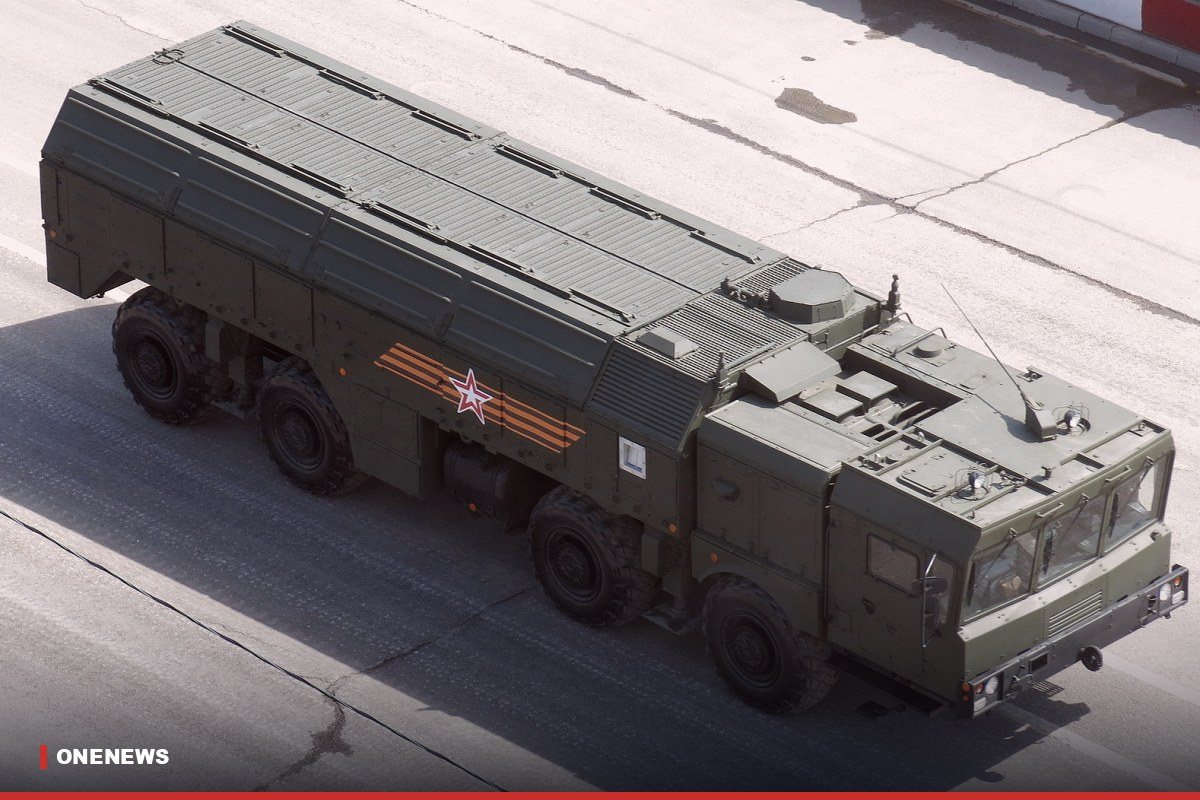


Ukrainian forces struck the Morozov plant outside St. Petersburg overnight on Nov. 9, Ukraine's General Staff said. According to the Ukrainian military, the facility produces solid rocket-fuel charges for the 9M723 ballistic missiles fired by Russia's Iskander-M system, a weapon Moscow uses regularly against Ukrainian cities. Russia's Defence Ministry did not comment, and the claim could not be independently verified.
What the General Staff said
The General Staff said three production workshops at the plant were damaged in a single strike and that the full extent of the damage was still being assessed. It said Ukraine was acting within its right to self-defence under Article 51 of the UN Charter.
According to the Ukrainian military, the Morozov plant:


- manufactures explosives;
- developed solid rocket propellant for the Topol-M missile system;
- produces and supplies solid-fuel charges for the 9Kh820 engines used in 9M723 Iskander-M missiles;
- belongs to Rostec, the state defence conglomerate that is under international sanctions.
The Kyiv Independent noted that Ukraine sanctioned the plant itself in August. The General Staff called the facility one of the key links in the supply chain for Russia's ballistic missiles, arguing that disrupting production at the very start of that chain, long before a missile reaches its launcher, makes it harder for Russia to build the Iskanders it fires at Ukrainian cities.
Why Iskanders matter so much
Ballistic missiles are among the hardest threats for Ukraine's air defences to counter. Ukraine says it cannot stop ballistic missiles once they are airborne without more U.S.-made Patriot systems, which are in short supply, The Associated Press reported. In late October, President Volodymyr Zelensky said Ukraine had been receiving an average of about 12 Patriot interceptors a month from the United States this year, while it needs to deal with roughly 150 Russian ballistic missiles a month.
Figures cited by The Kyiv Independent put the number of ballistic missiles Russia has fired at Ukraine since the start of 2026 at more than 500. Ukrainian military intelligence estimates Russian industry can turn out more than 200 cruise and ballistic missiles a month. In its Nov. 9 assessment, the Institute for the Study of War (ISW) also said Russia is modifying anti-aircraft and ballistic missiles to expand ballistic-trajectory strikes, particularly against transport hubs in Kyiv.
The capital felt the impact only days ago. Overnight on Nov. 7, several waves of ballistic missiles hit Kyiv, The Kyiv Independent reported. City authorities said at least six people were injured, including a 14-year-old girl, according to Mayor Vitali Klitschko, and residential buildings, a kindergarten and the Northern Bridge were damaged.
Part of a wider campaign
The strike fits a broader pattern. Since early summer, Ukraine has stepped up long-range attacks on Russian oil refineries and defence plants, and ISW said on Nov. 9 that Kyiv had continued its campaign against Russian missile production facilities overnight.


Two days earlier, on Nov. 7, the General Staff reported hitting two Iskander launchers and a Pantsir-S1 air defence system in Russia's Bryansk region, as well as striking the Proton-Elektrotex plant in Oryol with Neptune missiles; the Ukrainian military says that plant makes components for Russian missiles. On the same night as the Morozov strike, drones also attacked the Kirishi oil refinery in the Leningrad region, an attack confirmed by the regional governor.
What it means
Targeting component makers, rather than only launchers in the field, reflects Kyiv's effort to cut the number of missiles Russia can fire at the production stage. How much difference the Nov. 9 strike makes will depend on the real scale of the damage, which no independent source has yet assessed, and on whether Russia has spare capacity elsewhere.
For Ukraine, ballistic missiles remain the central air defence problem heading into winter, since Russia uses them against energy and transport targets. Alongside its long-range strikes, Kyiv continues to press partners for more interceptors and air defence systems.
What's Your Reaction?
 Like
0
 Dislike
0
 Love
0
 Funny
0
 Wow
0
 Sad
0
 Angry
0







Comments (0)