


In Ukraine's constitutional system, the President stands at the top of the state but does not control every lever of power. The office combines the roles of head of state, guarantor of the Constitution and commander of the armed forces, while day-to-day executive government belongs to the Cabinet of Ministers and lawmaking to the Verkhovna Rada. This mixed design, often described as parliamentary-presidential, shapes much of Ukrainian political life.
Who can become President
The President is elected directly by citizens for a five-year term. Article 103 of the Constitution sets the requirements for candidates. A candidate must:
- be a citizen of Ukraine who has reached the age of 35;
- have the right to vote;
- have resided in Ukraine for the ten years preceding election day;
- have command of the state language.
The same person cannot hold the office for more than two consecutive terms. Regular presidential elections take place on the last Sunday of March in the fifth year of the President's term. The newly elected President assumes office by taking an oath before the Verkhovna Rada at a ceremonial session, swearing on the Constitution.
While in office, the President may not hold any other representative mandate, any post in public bodies or associations, or engage in business. The President enjoys immunity during the term of office.
The main powers
Article 106 lists the President's powers in detail. They can be grouped into several areas:
- Guarantor of the state. The President ensures state independence, national security and the legal succession of the state, and is the guarantor of state sovereignty, territorial integrity and the observance of the Constitution and human rights.
- Representation. The President represents the state in international relations, conducts negotiations and concludes treaties.
- Defence and security. The President is Supreme Commander-in-Chief of the Armed Forces, appoints and dismisses the high command and heads the National Security and Defence Council, the coordinating body on security matters.
- Formation of the government. The President submits to parliament the candidate for Prime Minister proposed by the parliamentary coalition, and nominates the Minister of Defence and the Minister of Foreign Affairs.
- Appointments. With the consent of parliament, the President appoints and dismisses the Prosecutor General. The President also appoints a third of the judges of the Constitutional Court and takes part in forming other bodies, such as the National Bank Council and the broadcasting regulator.
- Legislation. The President has the right of legislative initiative, may designate bills as urgent, signs laws and may return them to parliament with proposals, commonly known as a veto.
- Other powers. These include granting citizenship, pardoning convicts, conferring state awards and the highest military ranks, and introducing martial law or a state of emergency, subject to approval by parliament.
The President issues decrees and orders that are binding throughout the country. Certain decrees must be countersigned by the Prime Minister and the minister responsible for implementing them, which ties some decisions to the government.
Checks on presidential power
The Constitution limits the office in several ways. The President cannot transfer powers to other persons or bodies and has only the powers expressly listed in the Constitution. The government is formed with the decisive involvement of the parliamentary coalition, and the Cabinet is accountable to the Verkhovna Rada. A presidential veto can be overridden by two-thirds of the deputies.
The President's ability to dissolve parliament is also restricted. Early termination of the Rada's powers is possible only on specific grounds, such as failure to form a coalition within a month or failure to form a Cabinet within sixty days, and parliament cannot be dissolved during the last six months of its own term or of the President's term. Presidential decrees can be reviewed by the Constitutional Court and, in many cases, challenged in the courts.
Impeachment and early termination
The powers of the President end early in four situations: resignation, inability to perform duties for health reasons, removal through impeachment, or death. If the office becomes vacant, the Chairman of the Verkhovna Rada temporarily performs the President's duties until a new President is elected in early elections.
Impeachment, regulated by Article 111, is deliberately difficult. It can be used only in cases of state treason or another crime. The procedure involves several steps:
- Parliament initiates the issue by a majority of its constitutional composition.
- A temporary special investigative commission is set up to examine the case.
- Parliament decides to bring charges by at least two-thirds of its constitutional composition.
- The Constitutional Court reviews whether the procedure was followed, and the Supreme Court confirms that the acts in question contain the elements of treason or another crime.
- The final decision to remove the President requires at least three-quarters of the constitutional composition, 338 votes.
The office in practice
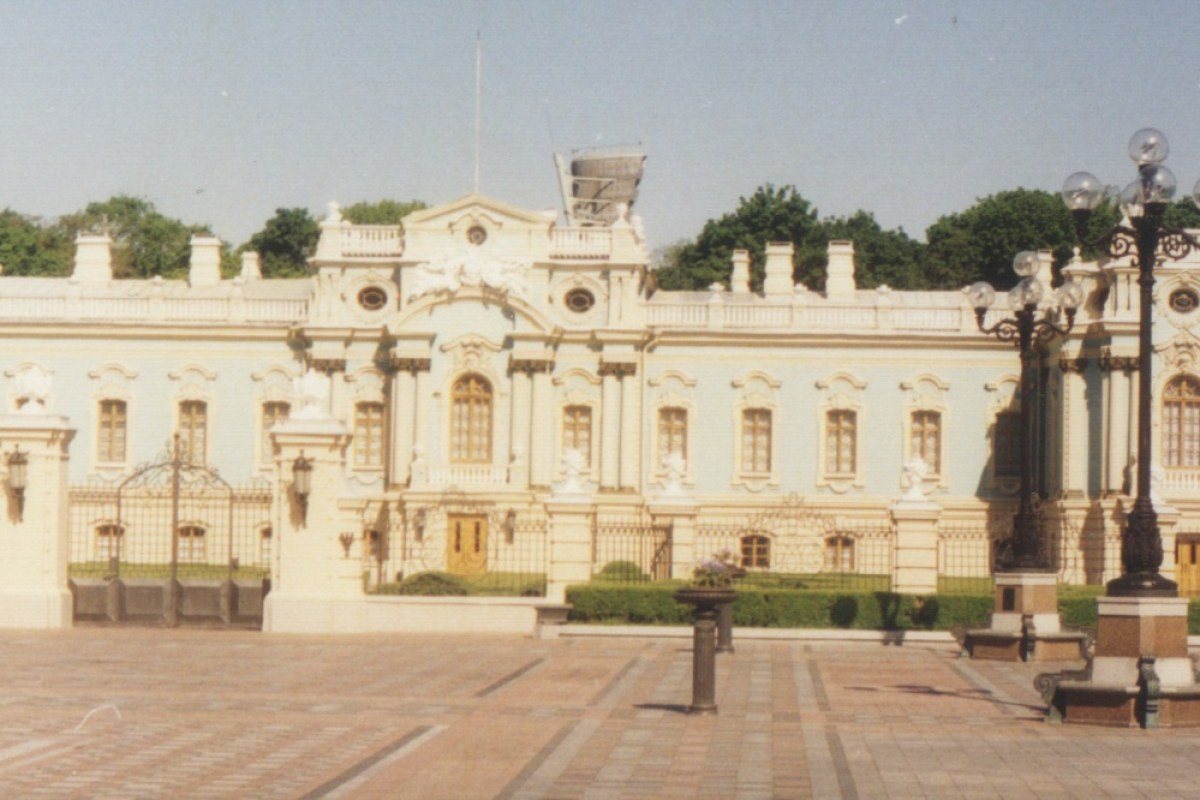
The President's administrative support is provided by the Office of the President, located on Bankova Street in Kyiv, while the eighteenth-century Mariinskyi Palace is used for official ceremonies. The real influence of any President depends not only on the constitutional text but also on the balance of forces in parliament and the relationship with the government. That is why the role has evolved over time, as constitutional amendments have repeatedly shifted the balance between the President and the Rada.
What's Your Reaction?
 Like
0
 Dislike
0
 Love
0
 Funny
0
 Wow
0
 Sad
0
 Angry
0










Comments (0)