


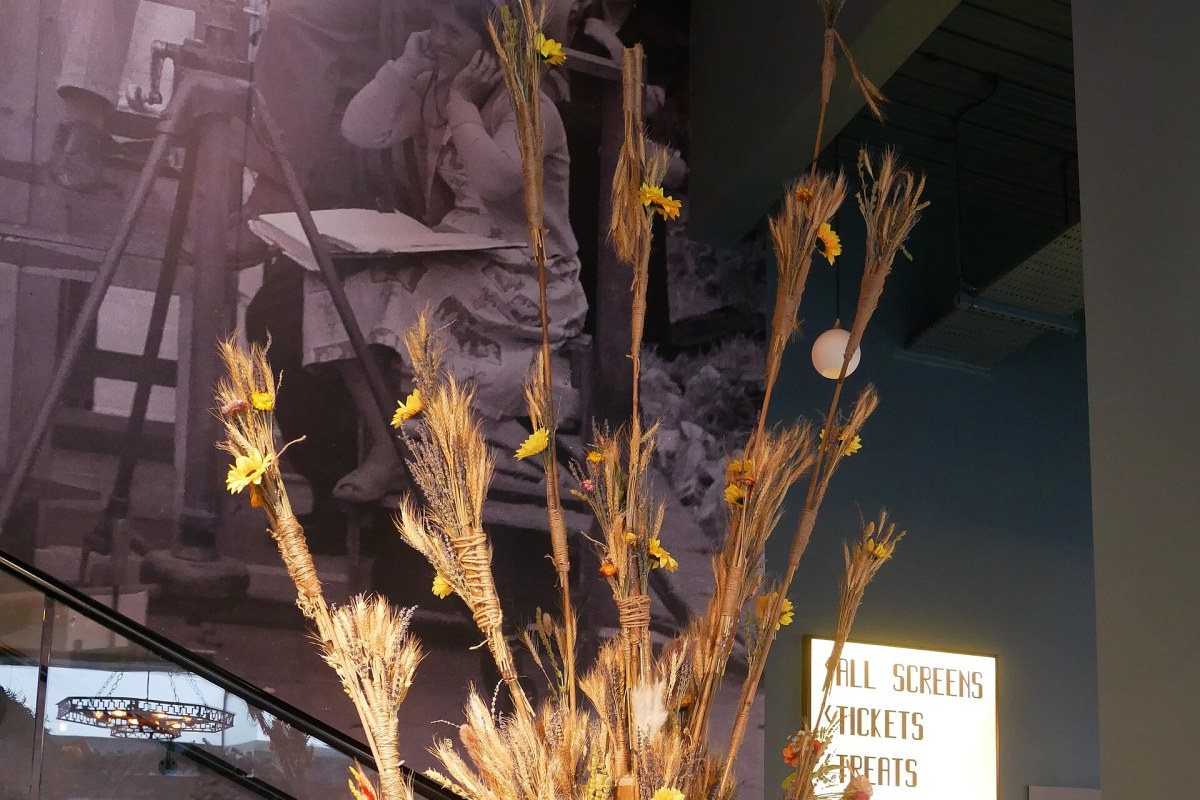
For most Ukrainian families, the most important moment of the Christmas season is not Christmas Day but the evening before it. Sviat Vechir, which translates as Holy Evening, gathers the whole family around a table set with twelve dishes, a sheaf of grain stands in the corner, and no one begins eating until the first star appears in the sky. The customs of this night combine Christian symbolism with farming rituals that are far older, and together they form one of the richest family traditions in Ukrainian culture.
When Ukrainians Celebrate Christmas
For much of the twentieth century, Christmas in Ukraine was associated with 7 January, the date that corresponds to 25 December in the Julian calendar used by Eastern churches. In 2023 Ukraine made 25 December its official Christmas holiday, and the Orthodox Church of Ukraine and the Ukrainian Greek Catholic Church moved their fixed feasts to the revised calendar. As a result, most Ukrainians now celebrate Sviat Vechir on 24 December, although some families and communities still keep the January dates. The traditions themselves are the same whichever date is chosen.
The Didukh and the Festive Table
Before supper the head of the household brings a didukh into the house. This is a decorated sheaf of wheat, rye or oats, often made from the last sheaf of the harvest. Its name comes from the word for grandfather, and it symbolises the spirits of the ancestors who are believed to join the family on this night. Hay is sometimes spread under the tablecloth as a reminder of the manger in Bethlehem, and garlic may be placed at the corners of the table for protection.
The supper traditionally consists of twelve dishes, often linked to the twelve apostles or the twelve months of the year. Because the day before Christmas was a strict fast, all dishes are meatless and, in many regions, free of dairy as well. The table usually includes:
- Kutia, the ceremonial first dish of boiled wheat with poppy seeds, honey and nuts, which every person must taste;
- Uzvar, a smoky drink of dried fruit;
- Meatless borscht, often served with small mushroom dumplings called vushka;
- Varenyky with potato, cabbage or cherries;
- Fish dishes, cabbage rolls, beans, peas and mushrooms.
An extra place is sometimes set for relatives who have died or who could not come home. A candle is lit, often placed in a round braided bread called a kolach, and the eldest member of the family begins the meal with a prayer.
Waiting for the First Star
Children are usually given the job of watching the sky. The appearance of the first evening star, a reference to the Star of Bethlehem, signals that supper can begin. The atmosphere is calm and solemn rather than festive in a noisy way: people greet each other with "Khrystos narodyvsia!" (Christ is born!) and answer "Slavimo Yoho!" (Let us glorify Him!).
Many small superstitions accompany the meal. Some families throw a spoonful of kutia at the ceiling, judging from how many grains stick whether the coming year will bring a good harvest or good bee-keeping. Leftover food is often left on the table overnight for the ancestors' souls.
Koliadky, the Star and the Vertep
After supper, or on Christmas Day itself, comes the time of koliadky, Christmas carols. Groups of carollers, called koliadnyky, go from house to house singing and wishing good fortune to the hosts. They traditionally carry a large star on a pole, a symbol of the Star of Bethlehem, which can be elaborately decorated and illuminated from inside.
Some troupes perform a vertep, a folk nativity play. Historically the vertep was a puppet theatre in a two-storey wooden box: the upper level showed the birth of Christ, and the lower level offered comic scenes with peasants, Cossacks and the wicked King Herod. Today the vertep is often staged by live actors, schoolchildren or church communities, and modern versions sometimes include topical humour.
Carolling is not only entertainment. In many villages young people collect donations while carolling and pass them to the church, to charities or to those in need, a custom that has become especially widespread in recent years.
A Tradition That Unites Generations
The power of Sviat Vechir lies in its blend of family, faith and memory. The didukh honours ancestors, the twelve dishes celebrate the harvest, the star and the carols tell the Christmas story, and the shared table brings relatives together after a long year. Even Ukrainians living far from home, from Canada to Australia, try to reproduce this evening as faithfully as they can, and for many of them the taste of kutia and the sound of a familiar koliadka are the essence of what home means.
What's Your Reaction?
 Like
0
 Dislike
0
 Love
0
 Funny
0
 Wow
0
 Sad
0
 Angry
0










Comments (0)