


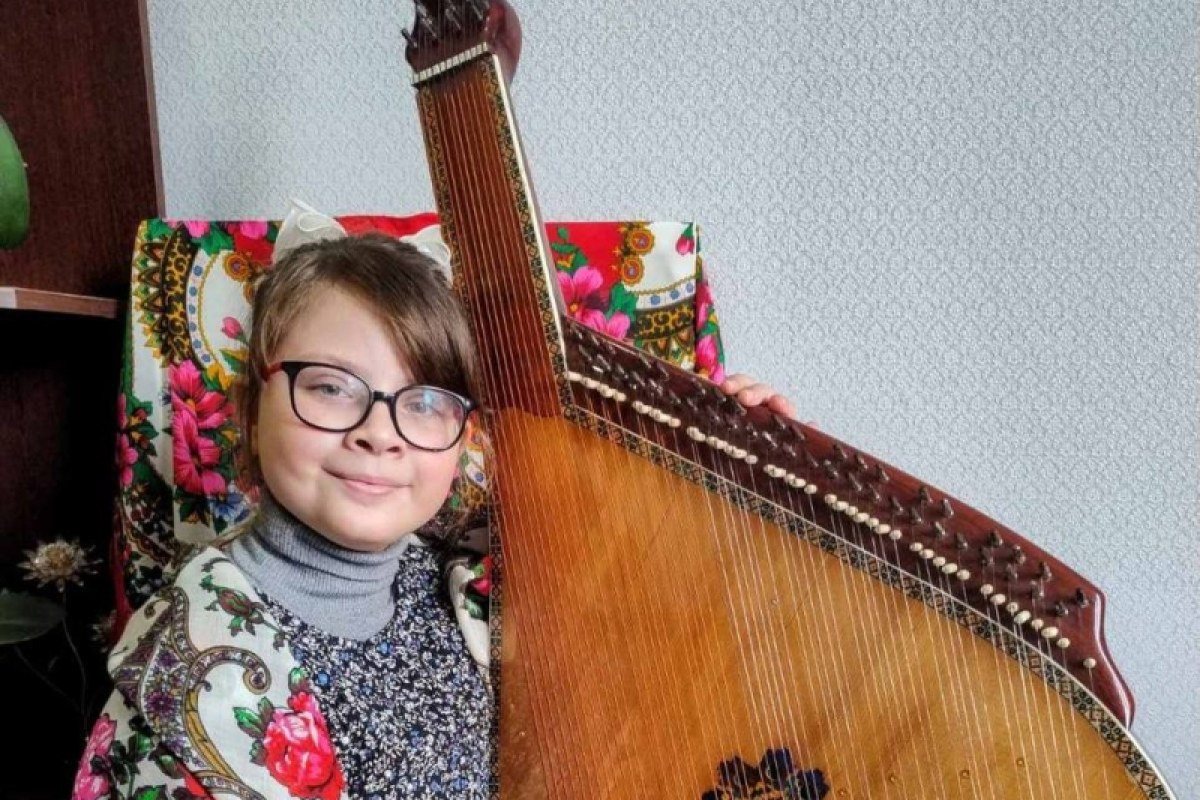
Hold a bandura and you immediately understand why it is unlike any other instrument. Its large, rounded wooden body is fitted with a short neck and dozens of strings, some running along the neck like a lute and many more stretched across the soundboard like a harp. Its sound is bright, ringing and slightly melancholic. For Ukrainians the bandura is more than an instrument: it is a symbol of national memory, closely linked to the wandering minstrels who sang about Cossack glory and human suffering.
From Kobza to Bandura
The bandura's predecessor was the kobza, a lute-like instrument with a few strings that was popular in Ukrainian lands by the sixteenth and seventeenth centuries. Over time, musicians added more strings, especially shorter treble strings called prystrunky placed on the body of the instrument. This allowed them to play melodies and accompaniment at the same time. Gradually the kobza evolved into the bandura, and the two names were often used interchangeably in older sources.
The instrument was strongly associated with the Cossacks. Folk paintings of the eighteenth century often show a Cossack sitting under a tree with a bandura or kobza, his horse and weapons nearby. This popular image, sometimes called "Cossack Mamai", made the instrument a visual emblem of Cossack freedom.
The Blind Minstrels: Kobzars and Lirnyky
For centuries the bandura's most important guardians were the kobzars, itinerant musicians who were usually blind. Since blindness made most work impossible, music offered a livelihood and a respected social role. Kobzars and their colleagues the lirnyky, who played the hurdy-gurdy, were organised in guilds with their own rules, apprenticeships and even a secret jargon.
Their repertoire included:
- Dumy: long, slow epic songs about Cossack battles, captivity in Turkish slavery and dramatic family stories;
- Religious and moral songs, known as psalms and kanty;
- Historical songs about famous leaders and events;
- Humorous and dance tunes for village celebrations.
The kobzars travelled from village to village, performing at markets, fairs and church gatherings. Their songs preserved historical memory at a time when most people could not read. Taras Shevchenko's first poetry collection, published in 1840, was titled Kobzar, and the name became a lasting synonym for the national poet himself.
The twentieth century was very hard on this tradition. In the Soviet period, the independent wandering minstrels were seen as a remnant of the old world and an unwelcome carrier of national and religious content. Many were persecuted in the 1930s, and the authentic guild tradition was almost destroyed. Researchers and musicians later worked to reconstruct it from recordings, notes and the memories of the last surviving performers.
How the Instrument Works
Modern banduras vary in size and design, but the main types used today include:
- The traditional or "old-world" bandura, with fewer strings and diatonic tuning, close to what kobzars played.
- The Kyiv-style concert bandura, a large chromatic instrument with up to around sixty or more strings, often fitted with mechanisms for changing key.
- The Kharkiv-style bandura, developed in the early twentieth century, which uses a special technique in which both hands can play across the full range.
The musician holds the instrument upright on the knees and plucks the strings with the fingertips or nails. The long bass strings give a deep resonance, while the treble strings produce a sparkling, harp-like sound.
The Bandura Today
In the twentieth century the bandura entered the concert hall. Professional ensembles and choirs of bandurysts were formed in Ukraine, and the diaspora created its own famous groups, such as the Ukrainian Bandurist Chorus in North America. Conservatories train bandura players, and composers write both solo and orchestral music for the instrument.
At the same time, a revival movement has brought back the traditional kobzar style. Craftspeople build copies of historical instruments, and young musicians learn the old dumy and psalms, often performing them in their original, austere manner. Others mix the bandura with jazz, rock and electronic music, proving that this centuries-old instrument can sound thoroughly modern.
Whether in a cathedral, a folk festival or a city street, the bandura continues to do what the kobzars did: tell stories that link Ukrainians to their past and carry their voice to the world.
What's Your Reaction?
 Like
0
 Dislike
0
 Love
0
 Funny
0
 Wow
0
 Sad
0
 Angry
0












Comments (0)